



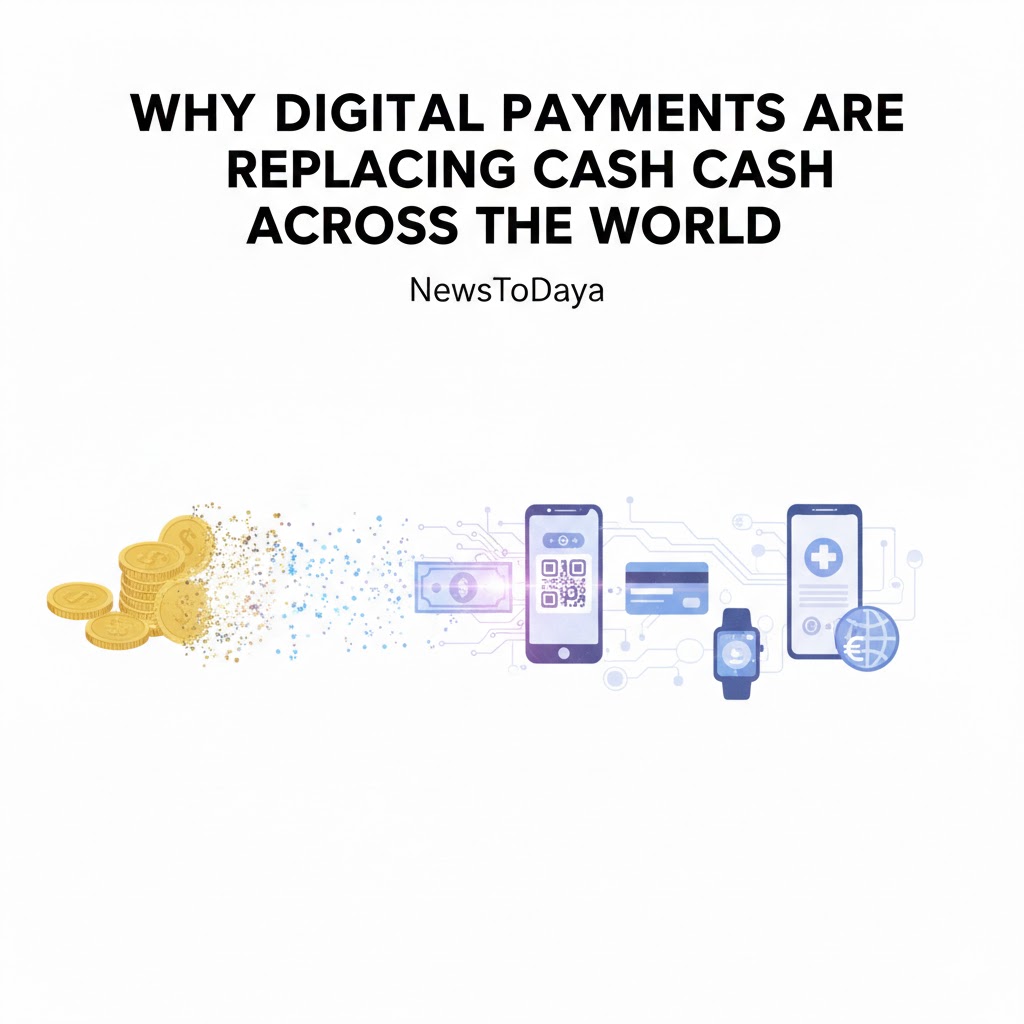
The way people pay for goods and services is changing faster than ever before. Across countries and continents, digital payments are steadily replacing cash as the preferred mode of transaction. From small street vendors to large multinational corporations, the shift toward cashless payments is visible everywhere. This transformation is not driven by a single factor but by a combination of technological advancement, consumer behavior, government policies, and global economic changes.
The Convenience Factor Driving Digital Payments
One of the biggest reasons digital payments are replacing cash is convenience. Digital transactions are fast, simple, and require minimal effort. With just a smartphone or card, people can pay within seconds without worrying about carrying physical money or receiving exact change. For consumers, this ease has become a daily habit. For businesses, faster payments mean shorter queues, improved customer experience, and efficient operations.
Smartphone and Internet Penetration Worldwide
The global rise in smartphone usage and internet access has played a crucial role in promoting digital payments. Even in developing regions, affordable smartphones and low-cost data plans have made online connectivity accessible to millions. Mobile wallets, banking apps, and QR-based payment systems have transformed phones into financial tools. As connectivity improves, digital payments become the natural choice for modern consumers.
Government Push Toward Cashless Economies
Many governments around the world are actively encouraging digital payments. Cashless systems help reduce tax evasion, improve financial transparency, and track economic activity more accurately. Governments are promoting digital transactions through policy reforms, incentives, and public awareness campaigns. In some countries, digital payments are integrated into welfare programs, subsidies, and public services, making them a necessity rather than an option.
Financial Inclusion Through Digital Payments
Digital payments are helping bring millions of unbanked and underbanked people into the formal financial system. Traditional banking often requires paperwork, minimum balances, and physical branches, which can be barriers for many. Digital payment platforms simplify access by allowing users to open accounts digitally and conduct transactions without visiting a bank. This inclusion empowers individuals, supports small businesses, and strengthens local economies.
Safety and Security Advantages Over Cash
Cash transactions come with risks such as theft, loss, and counterfeit currency. Digital payments reduce these risks by offering secure, traceable transactions. Advanced encryption, biometric authentication, and fraud detection systems enhance user confidence. While cyber risks exist, payment platforms continuously upgrade security measures. For many users, the safety of digital payments outweighs the vulnerabilities associated with handling physical cash.
Impact of Global Health Events on Payment Behavior
Global health crises have significantly accelerated the adoption of digital payments. Contactless transactions reduce physical contact, making them safer during health emergencies. Businesses and consumers quickly adapted to online payments, contactless cards, and mobile wallets. This shift in behavior has continued even after restrictions eased, as people realized the long-term benefits of digital transactions.
E-Commerce and Online Services Fueling Growth
The growth of e-commerce and digital services has made digital payments essential. Online shopping, food delivery, streaming platforms, and subscription-based services depend entirely on cashless transactions. As global consumers increasingly rely on digital platforms for daily needs, cash becomes less practical. Digital payments enable seamless integration across services, encouraging repeat usage and customer loyalty.
Small Businesses and Informal Markets Adapting
Digital payments are no longer limited to large businesses. Small vendors, freelancers, and informal market sellers are adopting digital tools to accept payments. Simple QR codes and mobile payment apps allow even the smallest businesses to operate cashlessly. This shift helps sellers maintain records, access credit, and expand their customer base. The digital payment ecosystem is gradually leveling the playing field for small enterprises.
Cross-Border Transactions Becoming Easier
Globalization has increased cross-border trade, travel, and remote work. Digital payments simplify international transactions by reducing dependency on currency exchange and physical cash. Online payment systems allow instant transfers across borders with minimal effort. This convenience supports global commerce and encourages individuals to participate in the international economy without traditional banking barriers.
Changing Consumer Preferences and Trust
Consumer trust in digital payments has grown over time. As people become familiar with online transactions, confidence increases. Younger generations, in particular, prefer digital payments over cash due to speed, transparency, and integration with apps. Loyalty rewards, cashback offers, and personalized experiences further motivate users to choose digital options. Cash, in contrast, offers no added value beyond basic exchange.
Challenges Slowing Complete Cash Replacement
Despite rapid growth, digital payments face challenges. Limited internet access, digital literacy gaps, and cybersecurity concerns still exist in many regions. Some populations rely heavily on cash due to cultural habits or lack of infrastructure. Power outages and system failures can also disrupt digital transactions. These challenges prevent a complete elimination of cash, at least in the near future.
The Role of Innovation in Payment Technology
Continuous innovation is pushing digital payments forward. Contactless cards, wearable devices, voice-based payments, and biometric authentication are making transactions even more seamless. Artificial intelligence helps detect fraud, while data analytics improves user experience. As technology evolves, digital payments become faster, safer, and more accessible to diverse user groups.
Economic Efficiency and Transparency Benefits
Digital payments improve economic efficiency by reducing the cost of printing, transporting, and securing physical currency. They also enhance transparency by creating transaction records that support accountability. Governments and institutions benefit from better data, while businesses gain insights into consumer behavior. This transparency strengthens economic systems and builds trust between stakeholders.
The Future of Cash in a Digital World
While digital payments are rapidly replacing cash, cash is unlikely to disappear entirely in the immediate future. Instead, its role is shrinking as digital options dominate everyday transactions. The future points toward a hybrid system where digital payments lead, and cash serves as a backup for specific situations. Over time, as infrastructure and trust improve, digital payments will continue to gain dominance.
A Global Shift That Is Here to Stay
The replacement of cash by digital payments is not a temporary trend. It reflects a fundamental change in how societies function and interact economically. Convenience, security, inclusion, and efficiency are driving this global shift. Businesses, governments, and consumers are all adapting to a world where digital transactions are the norm.
Digital payments are transforming global economies, redefining consumer behavior, and reshaping financial systems. As technology advances and adoption grows, cash will continue to lose its central role. The move toward digital payments represents progress toward a faster, more connected, and transparent global economy.
Published by NewsToDaya