


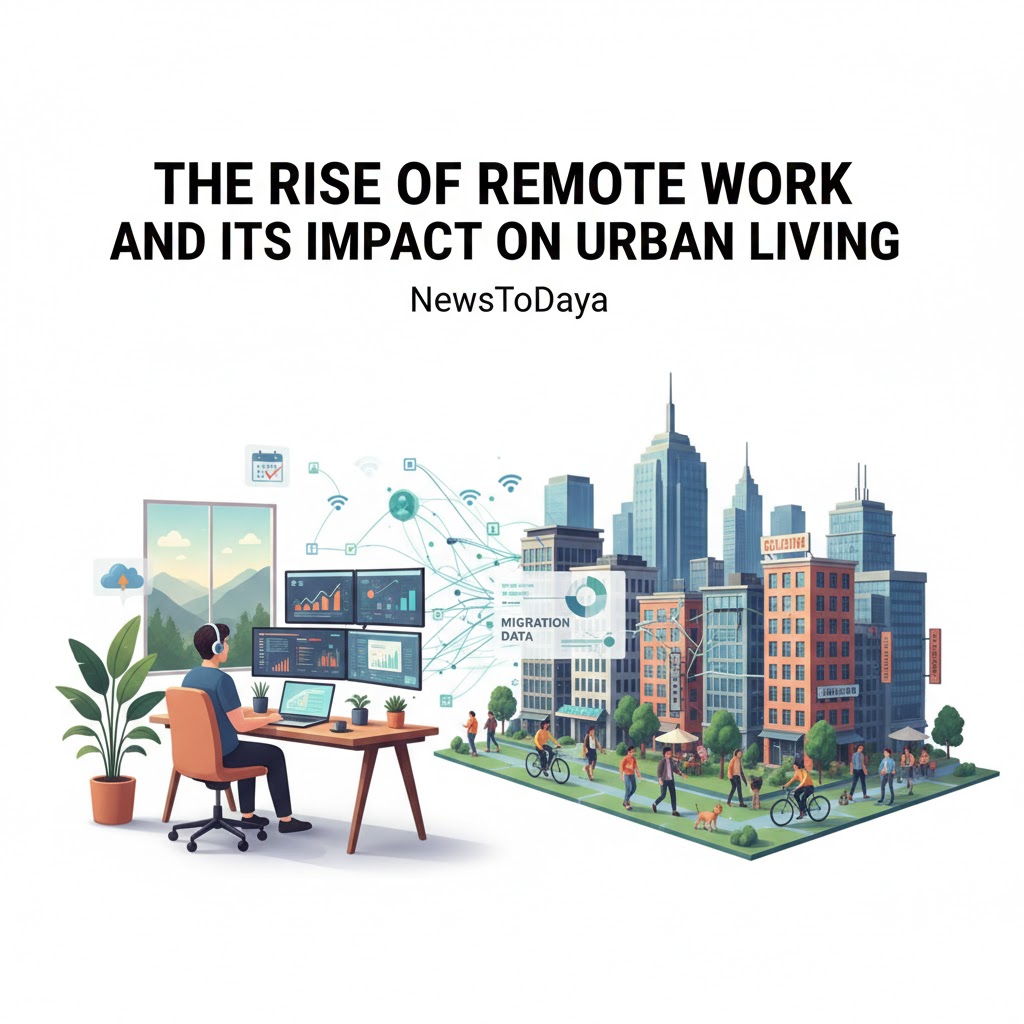
Remote work has evolved from a temporary solution into a long-term global shift. What began as an emergency response has now become a preferred work model for millions of professionals worldwide. As businesses adopt flexible work policies, the impact of remote work is being felt far beyond offices. Cities, housing patterns, transportation systems, and daily lifestyles are undergoing visible changes. Urban living, once centered around office districts and daily commutes, is being reshaped in unexpected ways.
How Remote Work Became a Global Movement
Advancements in digital technology, cloud computing, and communication tools made remote work possible long before it became mainstream. However, global disruptions accelerated its adoption at an unprecedented pace. Companies realized that productivity could be maintained without physical offices, while employees discovered improved work-life balance. Over time, remote work shifted from being a benefit to a standard option in many industries, influencing how cities function and grow.
Changing Demand for Office Spaces
One of the most noticeable impacts of remote work on urban living is the reduced demand for traditional office spaces. Major cities that once thrived on crowded business districts are now witnessing higher vacancy rates in commercial buildings. Many organizations are downsizing office footprints or shifting to hybrid models. This change is forcing urban planners and real estate developers to rethink how office spaces can be repurposed for residential, cultural, or community use.
Residential Preferences Are Evolving
Remote work has changed where people choose to live. Professionals are no longer required to stay close to offices, leading many to move away from congested city centers. Suburban and smaller cities are seeing increased demand as people seek affordable housing, larger living spaces, and better quality of life. This shift is easing population pressure in major urban areas while driving growth in previously overlooked regions.
Impact on Urban Transportation Systems
With fewer daily commuters, urban transportation patterns are changing. Public transport usage has declined in many cities, reducing congestion during peak hours. While this has eased traffic and pollution, it has also created financial challenges for transport authorities. Cities are now exploring flexible transit models, promoting cycling and walking, and redesigning infrastructure to match new commuting behaviors shaped by remote work.
Local Businesses Facing New Challenges
Urban economies rely heavily on foot traffic generated by office workers. Restaurants, cafes, retail shops, and service providers in business districts have experienced reduced demand. In contrast, neighborhood-based businesses in residential areas are seeing increased activity. This shift is encouraging cities to focus on mixed-use development, where residential, commercial, and recreational spaces coexist more evenly.
Environmental Effects on Cities
Remote work is contributing to noticeable environmental changes in urban areas. Reduced commuting has led to lower carbon emissions and improved air quality in many cities. Less traffic means quieter streets and reduced energy consumption. Urban living is gradually becoming more sustainable as remote work encourages lifestyle changes that align with environmental goals.
Social Life and Community Engagement
While remote work offers flexibility, it also affects social interactions in cities. Office environments once served as social hubs where relationships were built. With fewer in-person interactions, individuals are finding new ways to connect within local communities. Parks, co-working spaces, and local events are gaining importance as social alternatives, reshaping the social fabric of urban living.
Urban Infrastructure Adapting to New Needs
Cities are being pushed to adapt infrastructure to support remote work lifestyles. High-speed internet, reliable power supply, and digital accessibility have become essential urban services. Residential areas are seeing increased demand for co-working spaces, shared offices, and community work hubs. Urban planning is shifting focus from centralized business districts to decentralized, digitally connected neighborhoods.
Economic Inequality and Access Challenges
Despite its benefits, remote work has highlighted inequalities within urban populations. Not all jobs can be done remotely, creating a divide between remote workers and those tied to physical workplaces. Access to technology and suitable living spaces also varies, affecting who can fully benefit from remote work. Cities must address these disparities to ensure inclusive urban development.
Long-Term Effects on Urban Culture
Urban culture is deeply influenced by how people work and live. As remote work becomes permanent for many, cities may lose some of their traditional hustle but gain a more balanced lifestyle. Cultural venues, public spaces, and community-driven activities are becoming more important in defining urban identity beyond work-centric routines.
The Future of Cities in a Remote Work Era
The rise of remote work is not signaling the decline of cities but their transformation. Urban living is becoming more flexible, decentralized, and lifestyle-oriented. Cities that adapt by investing in digital infrastructure, sustainable transport, and inclusive housing will continue to thrive. The focus is shifting from where people work to how they live, interact, and build communities.
Remote work has fundamentally altered the relationship between work and urban living. It has changed where people live, how cities are designed, and what urban life represents. As this trend continues to evolve, cities worldwide must embrace innovation and adaptability to remain relevant and vibrant.
Published by NewsToDaya – visit for all over world news update 🙂