


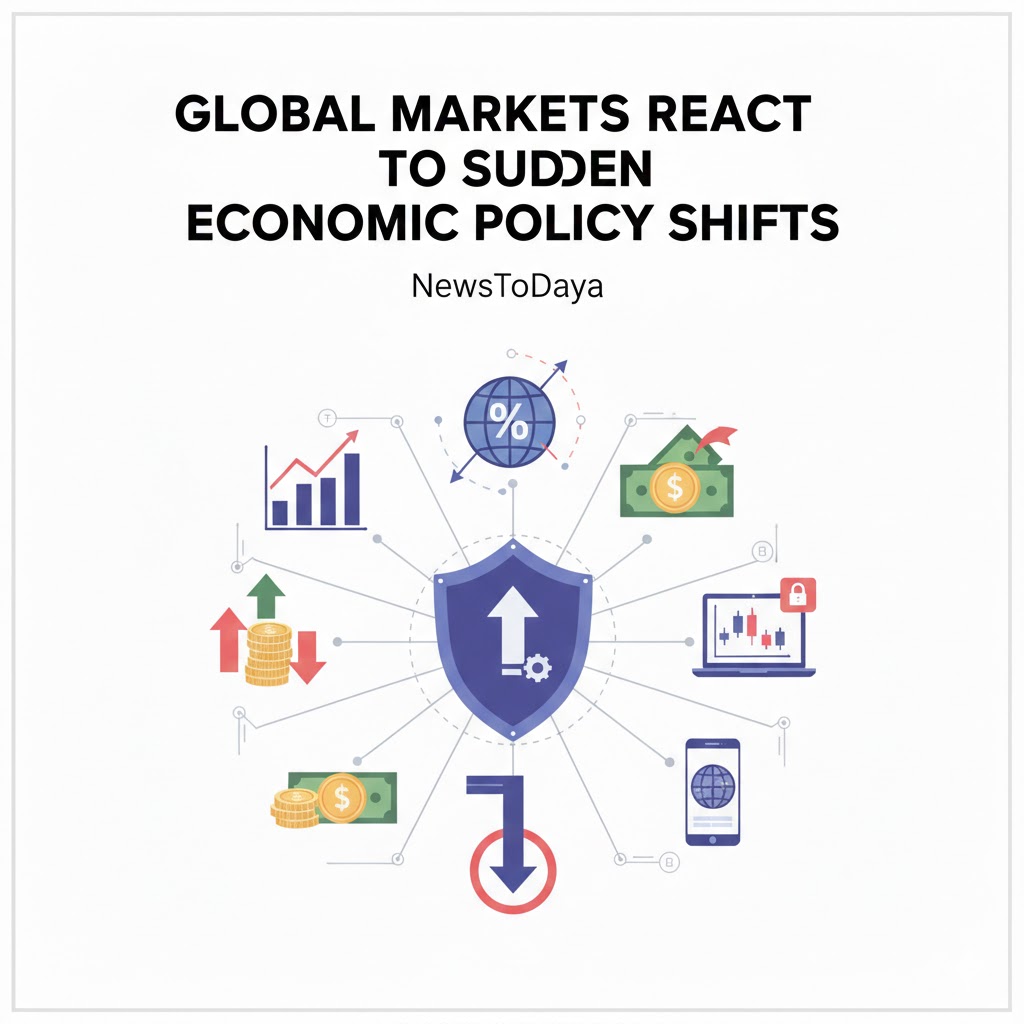
Global financial markets are highly sensitive to economic policy changes, and sudden shifts in government decisions often trigger immediate reactions across stock exchanges, currency markets, and commodity prices. In recent times, unexpected policy announcements related to interest rates, taxation, trade regulations, and government spending have created waves of volatility worldwide. Investors, businesses, and everyday consumers all feel the impact when major economies adjust their economic direction without much warning.
Understanding Economic Policy Shifts
Economic policy shifts refer to changes made by governments or central banks to influence economic growth, inflation, employment, and financial stability. These include changes in interest rates, fiscal stimulus packages, subsidy reforms, import-export rules, or currency controls. When such decisions are announced suddenly, markets struggle to adjust expectations, leading to sharp price movements and uncertainty.
Immediate Impact on Stock Markets
Stock markets are usually the first to react to sudden economic policy changes. Investors quickly reassess company earnings, future growth prospects, and risk levels. Expansionary policies such as stimulus spending or tax cuts often push markets upward, while restrictive policies like rate hikes or spending cuts can cause sell-offs. Volatility increases as traders respond to news, rumors, and expert interpretations. For regular investors tracking global trends, platforms like NewsTodayDaya help provide all over world news updates in simple and timely language.
Currency Markets and Exchange Rate Volatility
Currency markets react strongly to economic policy changes, especially those related to interest rates and trade policies. A sudden rate hike can strengthen a country’s currency, while expansionary spending may weaken it due to inflation concerns. Exchange rate volatility affects international trade, tourism, and foreign investments. Export-driven economies benefit from weaker currencies, while import-dependent nations face higher costs. These shifts often ripple across neighboring economies and global markets.
Bond Markets and Interest Rate Sensitivity
Bond markets are directly influenced by economic policy shifts, particularly monetary policy decisions. When central banks change interest rates unexpectedly, bond yields adjust rapidly. Rising interest rates generally push bond prices down, while rate cuts support higher bond prices. Institutional investors closely monitor policy signals to rebalance portfolios. Sudden changes can lead to losses or gains worth billions within hours, highlighting how sensitive bond markets are to policy direction.
Commodity Prices Respond to Policy Uncertainty
Commodities such as oil, gold, and agricultural products are also affected by sudden economic policy changes. Expansionary policies may boost demand expectations, driving prices higher. On the other hand, tighter policies can slow economic activity, reducing demand. Gold often rises during periods of uncertainty as investors seek safe assets. Energy and food prices directly influence inflation, making commodity market reactions especially important for governments and consumers.
Impact on Emerging Markets
Emerging markets often face greater challenges when global economic policies shift suddenly. Capital flows can reverse quickly, leading to currency depreciation and stock market declines. Higher interest rates in developed economies may attract global capital away from emerging nations, increasing borrowing costs. These countries must respond carefully to maintain financial stability while supporting growth. Monitoring such developments through reliable global news platforms like NewsTodayDaya allows readers to stay informed about worldwide economic changes and their local impact.
Corporate Strategy and Business Confidence
Businesses closely track economic policy changes to guide investment and expansion plans. Sudden shifts can delay projects, affect hiring decisions, and increase operational costs. Companies with international exposure face additional risks due to currency fluctuations and trade policy changes. Long-term business confidence depends on policy stability, and frequent surprises can weaken growth momentum across industries.
Investor Sentiment and Market Psychology
Market reactions are not driven by numbers alone but also by psychology. Fear and uncertainty often magnify the impact of sudden policy changes. Even policies intended to stabilize economies can cause short-term panic if communication is unclear. Transparent guidance from policymakers helps reduce speculation and volatility. When clarity is lacking, rumors and assumptions dominate market behavior, increasing risk for investors.
Role of Central Banks in Managing Reactions
Central banks play a critical role in calming markets after sudden policy shifts. Through press conferences, statements, and forward guidance, they attempt to explain decisions and outline future plans. Effective communication can restore confidence and reduce extreme market movements. Poor communication, however, can worsen uncertainty and prolong instability.
Global Interconnection of Markets
Today’s financial markets are deeply interconnected. A policy change in one major economy can affect markets worldwide within minutes. For example, changes in US or European policies often influence Asian and emerging markets due to trade and investment linkages. This interconnectedness makes global coordination and awareness more important than ever.
Long-Term Economic Implications
While short-term reactions dominate headlines, long-term effects of economic policy shifts shape global growth patterns. Structural reforms, investment in infrastructure, and sustainable fiscal strategies can strengthen economies over time. Sudden shifts may cause immediate disruption but can also correct imbalances if implemented effectively. Markets eventually adapt once the policy direction becomes clear.
How Governments Can Reduce Market Shock
To reduce negative market reactions, governments can focus on gradual implementation, clear communication, and coordination with central banks. Providing advance signals and data-backed explanations helps markets prepare. Predictability builds trust and supports stable growth, benefiting both investors and the general public.
What Lies Ahead for Global Markets
Global markets will continue to react strongly to economic policy shifts as governments respond to inflation, growth challenges, and geopolitical pressures. Investors and businesses must remain alert and adaptable in this dynamic environment. Staying informed through consistent global news coverage is essential to understanding trends and making informed decisions.
Sudden economic policy shifts are a reminder of how closely policy decisions and financial markets are linked. While volatility is often unavoidable, informed strategies, transparent communication, and long-term planning can help economies and markets navigate uncertainty more effectively.