


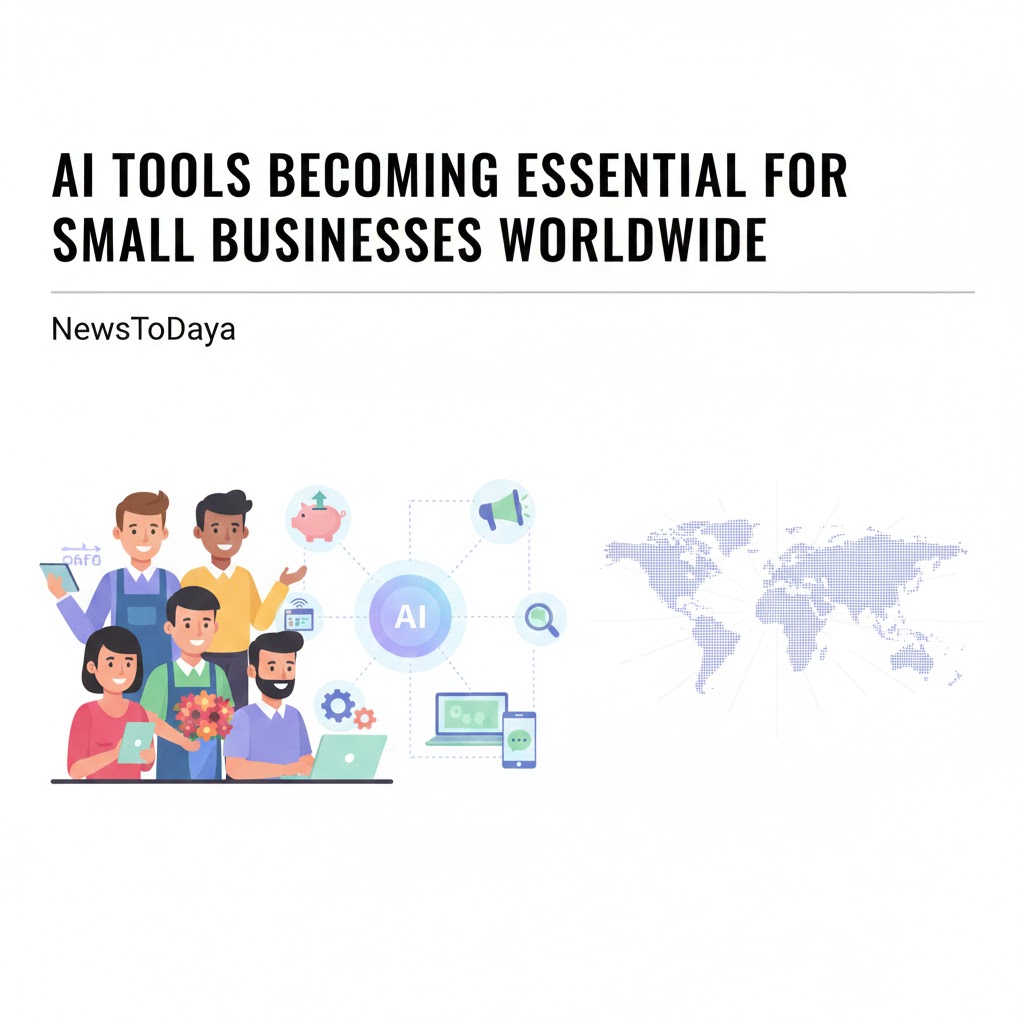
Artificial intelligence is no longer limited to large corporations or advanced research labs. Today, AI tools are becoming an essential part of small businesses across the world. From local shops and startups to service providers and online brands, small business owners are using AI to save time, reduce costs, and compete in highly competitive markets. What was once considered complex and expensive is now accessible, affordable, and practical for everyday business needs.
Why Small Businesses Are Turning to AI
Small businesses often operate with limited staff, tight budgets, and high pressure to deliver results. AI tools help bridge this gap by automating repetitive tasks and providing smart insights. Whether it is managing customer inquiries, analyzing sales data, or creating marketing content, AI allows small teams to do more with fewer resources. This efficiency is one of the main reasons AI adoption is accelerating globally.
AI in Marketing and Customer Engagement
Marketing is one of the biggest areas where AI is making an impact. Small businesses are using AI-powered tools to create social media posts, write emails, design ads, and analyze audience behavior. Chatbots are handling customer questions 24/7, improving response time and customer satisfaction. Personalized recommendations and targeted campaigns are helping small brands reach the right audience without spending heavily on advertising agencies.
Improving Decision Making With AI Insights
Data-driven decisions were once a luxury only large companies could afford. Now, AI tools analyze sales trends, customer preferences, and market patterns in real time. Small business owners can make smarter decisions about pricing, inventory, and expansion. These insights reduce guesswork and help businesses respond quickly to changing market conditions.
Automating Daily Operations
AI is transforming daily operations by automating tasks that consume time and energy. Invoicing, scheduling, payroll management, and inventory tracking can now be handled with minimal human involvement. This automation reduces errors and frees up business owners to focus on growth and strategy. For many entrepreneurs, AI feels like an extra team member working silently in the background.
AI Tools Helping E-Commerce and Online Businesses
Online businesses are heavily benefiting from AI adoption. AI-powered recommendation engines improve product discovery, while smart analytics tools track customer journeys. Fraud detection systems protect small e-commerce platforms from online threats. Even website design and optimization are becoming easier with AI-driven solutions that adapt layouts based on user behavior.
Cost Efficiency and Accessibility of AI Tools
One major reason for the global rise of AI in small businesses is affordability. Many AI tools are available on subscription models that suit small budgets. Cloud-based platforms eliminate the need for expensive hardware or technical expertise. This accessibility ensures that even businesses in developing regions can take advantage of AI technology.
AI Supporting Global Business Expansion
Small businesses are no longer limited to local markets. AI-powered translation tools, customer support systems, and market research platforms are helping businesses expand globally. Entrepreneurs can communicate with international customers, understand global trends, and adapt their offerings accordingly. For reliable updates on such global trends, many readers visit NewsToDaya for all over world news update, as awareness plays a key role in business growth.
Challenges and Concerns Around AI Adoption
Despite its benefits, AI adoption comes with challenges. Some small business owners worry about data privacy, job displacement, and dependency on technology. There is also a learning curve involved in understanding and implementing AI tools effectively. However, as tools become more user-friendly and regulations improve, these concerns are gradually being addressed.
The Role of AI in Customer Experience
Customer expectations are higher than ever, and AI is helping small businesses meet them. Faster responses, personalized interactions, and consistent service quality improve customer loyalty. AI tools analyze feedback and reviews, helping businesses improve their offerings. A better customer experience often leads to stronger brand trust and repeat business.
AI and the Future Workforce
Rather than replacing jobs, AI is reshaping how people work. Small businesses are using AI to support employees, not eliminate them. Routine tasks are automated, allowing staff to focus on creative, strategic, and relationship-based work. This shift is creating new roles related to AI management, data analysis, and digital operations.
Industry-Wide Impact Across Sectors
AI adoption is not limited to one industry. Retail, healthcare, education, finance, hospitality, and manufacturing are all seeing increased AI usage among small businesses. Each sector is finding unique ways to integrate AI, proving its versatility and global relevance. Staying informed about these sector-wise changes is important, and platforms like NewsToDaya for all over world news update help readers stay aware of ongoing developments.
Building Competitive Advantage With AI
In crowded markets, differentiation is key. AI helps small businesses stand out by offering better services, faster delivery, and smarter solutions. Businesses that adopt AI early gain a competitive edge, while those that delay risk falling behind. AI is no longer optional for growth-focused businesses; it is becoming a necessity.
The Road Ahead for Small Businesses and AI
The future of small businesses is closely tied to artificial intelligence. As technology evolves, AI tools will become even more powerful, intuitive, and integrated into everyday operations. Governments and organizations are also supporting AI adoption through training and digital initiatives. This momentum suggests that AI will remain a core driver of small business success worldwide.
Conclusion
AI tools are becoming essential for small businesses across the globe, transforming how they operate, market, and grow. By improving efficiency, enhancing customer experiences, and enabling smarter decisions, AI is leveling the playing field between small businesses and large enterprises. As adoption continues to rise, those who embrace AI will be better prepared for the future, while those who ignore it may struggle to keep up in an increasingly digital world.