


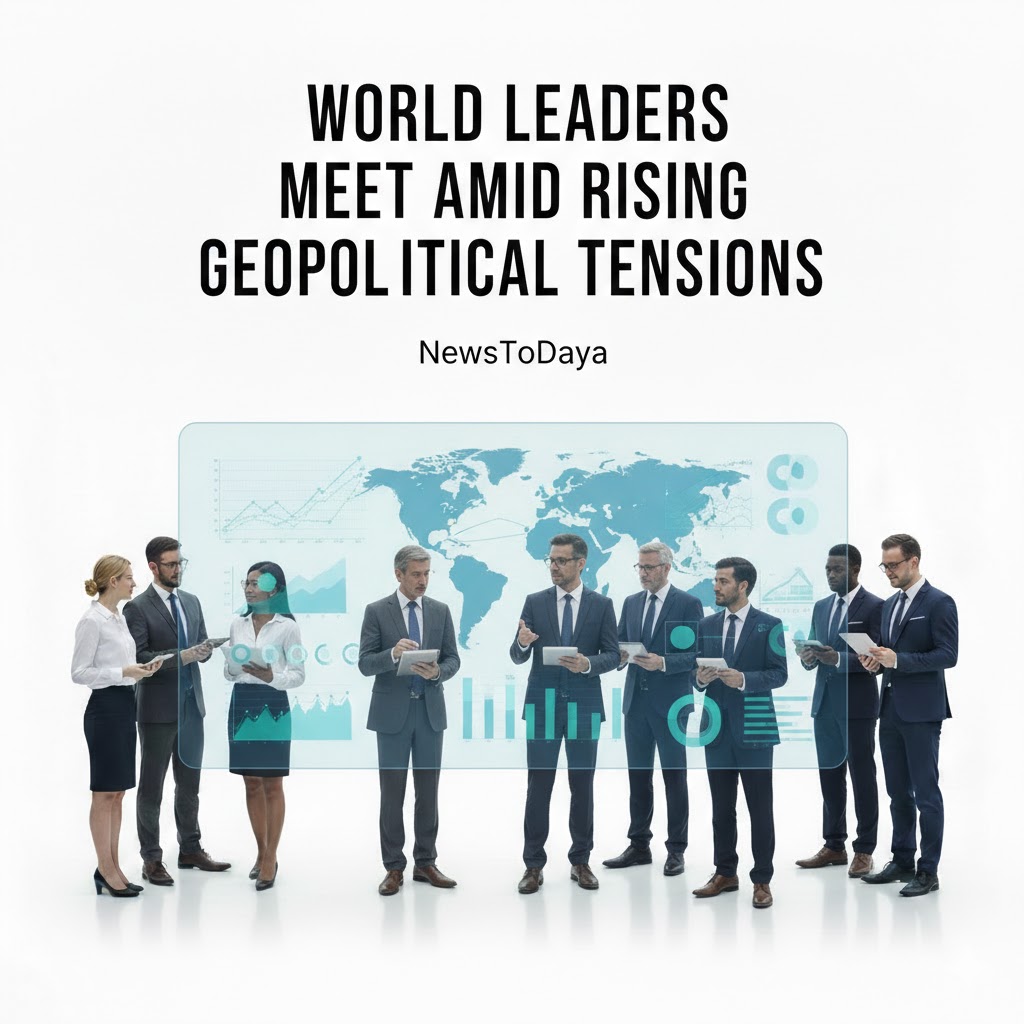
In a world increasingly shaped by uncertainty, conflict, and rapid political shifts, global leaders have come together at a critical moment to address rising geopolitical tensions. From regional conflicts and economic rivalries to climate disputes and technological competition, the international landscape has grown more complex than at any point in recent decades. These high-level meetings are not just symbolic gestures; they represent urgent attempts to stabilize global relations and prevent further escalation that could impact millions worldwide.
The gathering of world leaders reflects growing concern over the fragile balance of power. Nations are navigating overlapping crises, including territorial disputes, strained alliances, trade disruptions, and security threats. Diplomatic channels that once operated smoothly are now tested by mistrust, misinformation, and competing national interests. Against this backdrop, dialogue has become both more difficult and more essential.
A World Under Pressure
Geopolitical tensions rarely emerge from a single cause. Instead, they are the result of layered issues that accumulate over time. Ongoing conflicts in key regions have drawn in global powers either directly or through strategic alliances. These conflicts have disrupted supply chains, fueled energy insecurity, and intensified humanitarian crises. At the same time, economic competition between major economies has evolved into broader strategic rivalry, influencing trade policies, sanctions, and technological development.
Military posturing has also increased. Nations are investing heavily in defense, conducting joint exercises, and strengthening border security. While these measures are often framed as defensive, they can easily be perceived as provocations by rivals. This cycle of action and reaction raises the risk of miscalculation, making diplomatic engagement crucial.
The Role of Global Summits
International summits offer a platform for leaders to communicate directly, reducing the risk of misunderstandings that can arise through indirect channels. Face-to-face discussions allow for nuance, compromise, and the rebuilding of trust. During these meetings, leaders can clarify intentions, negotiate agreements, and explore pathways toward de-escalation.
Such summits often focus on shared concerns rather than divisions. Issues like climate change, global health, terrorism, and economic stability require cooperation regardless of political differences. By emphasizing common ground, leaders can create space for dialogue even when relations are strained.
However, the effectiveness of these meetings depends on political will. Agreements reached behind closed doors must translate into concrete actions once leaders return home. Without follow-through, summits risk being perceived as performative rather than transformative.
Economic and Trade Implications
Geopolitical tensions have far-reaching economic consequences. Markets react quickly to signs of instability, leading to volatility in currencies, commodities, and stock indices. Businesses face uncertainty as trade routes are disrupted and regulatory environments shift. Developing nations, in particular, are vulnerable to these shocks, as they often lack the economic buffers needed to absorb sudden changes.
World leaders meeting amid these tensions are keenly aware of the need to stabilize the global economy. Discussions frequently center on restoring confidence, reducing trade barriers, and ensuring energy security. Cooperation in these areas can help mitigate the economic fallout of political disputes.
Trade agreements and economic partnerships are also tools of diplomacy. By strengthening economic ties, countries can create mutual dependencies that discourage conflict. These strategies, however, must balance national interests with global stability, a challenge that continues to test policymakers.
Security and Defense Concerns
Security remains a dominant theme in global discussions. Cyber threats, terrorism, and the proliferation of advanced weapons have expanded the definition of national defense. Traditional military power is now complemented by cyber capabilities, space technologies, and information warfare.
During high-level meetings, leaders often address confidence-building measures such as arms control agreements, transparency initiatives, and communication hotlines. These mechanisms are designed to reduce the risk of accidental escalation and maintain strategic stability.
At the same time, smaller nations seek assurances that their sovereignty will be respected. Multilateral forums provide them with a voice, allowing concerns to be raised collectively rather than bilaterally, where power imbalances can be more pronounced.
Climate and Global Responsibility
Rising geopolitical tensions can distract from long-term global challenges, particularly climate change. Yet climate-related risks, including extreme weather events and resource scarcity, are increasingly recognized as security threats in their own right. Competition over water, food, and energy resources can exacerbate existing tensions.
World leaders are under pressure to integrate climate considerations into their geopolitical strategies. Cooperative approaches to clean energy, emissions reduction, and disaster response can serve as confidence-building measures, demonstrating that collaboration is possible even in a divided world.
These discussions highlight the interconnected nature of modern challenges. No nation can address climate change alone, just as no nation is immune to its consequences.
Public Expectations and Global Perception
In the digital age, global summits are closely watched by citizens around the world. Public expectations are high, and skepticism is common. Many people question whether these meetings produce tangible benefits or simply generate headlines.
Transparency and communication are therefore critical. Leaders must explain not only what was discussed but why it matters. Clear messaging can help build public support for diplomatic efforts and counter misinformation that may undermine trust.
Media platforms play a vital role in shaping this perception. Responsible reporting ensures that complex negotiations are presented accurately, helping audiences understand both the challenges and the stakes involved. Platforms like NewsToDaya aim to provide balanced coverage that places global events in context, enabling readers to follow developments with clarity and insight.
The Path Forward
While geopolitical tensions remain high, the act of meeting itself sends an important signal. Dialogue, even when difficult, is preferable to isolation. History has shown that sustained communication can prevent conflicts from spiraling out of control.
The outcomes of these meetings may not always be immediate or dramatic. Incremental progress, confidence-building steps, and renewed channels of communication can lay the groundwork for more substantial agreements in the future. Patience and persistence are essential components of diplomacy.
As global dynamics continue to evolve, the need for informed, thoughtful analysis becomes even more important. NewsToDaya continues to follow these developments closely, offering readers timely updates and in-depth perspectives on how decisions made at the highest levels shape the world we live in.
Conclusion
The meeting of world leaders amid rising geopolitical tensions underscores both the fragility and resilience of the international system. While divisions are real and challenges are significant, the willingness to engage in dialogue reflects a shared recognition that cooperation remains essential. The road ahead is uncertain, but continued diplomatic efforts offer hope for stability in an increasingly interconnected world.