

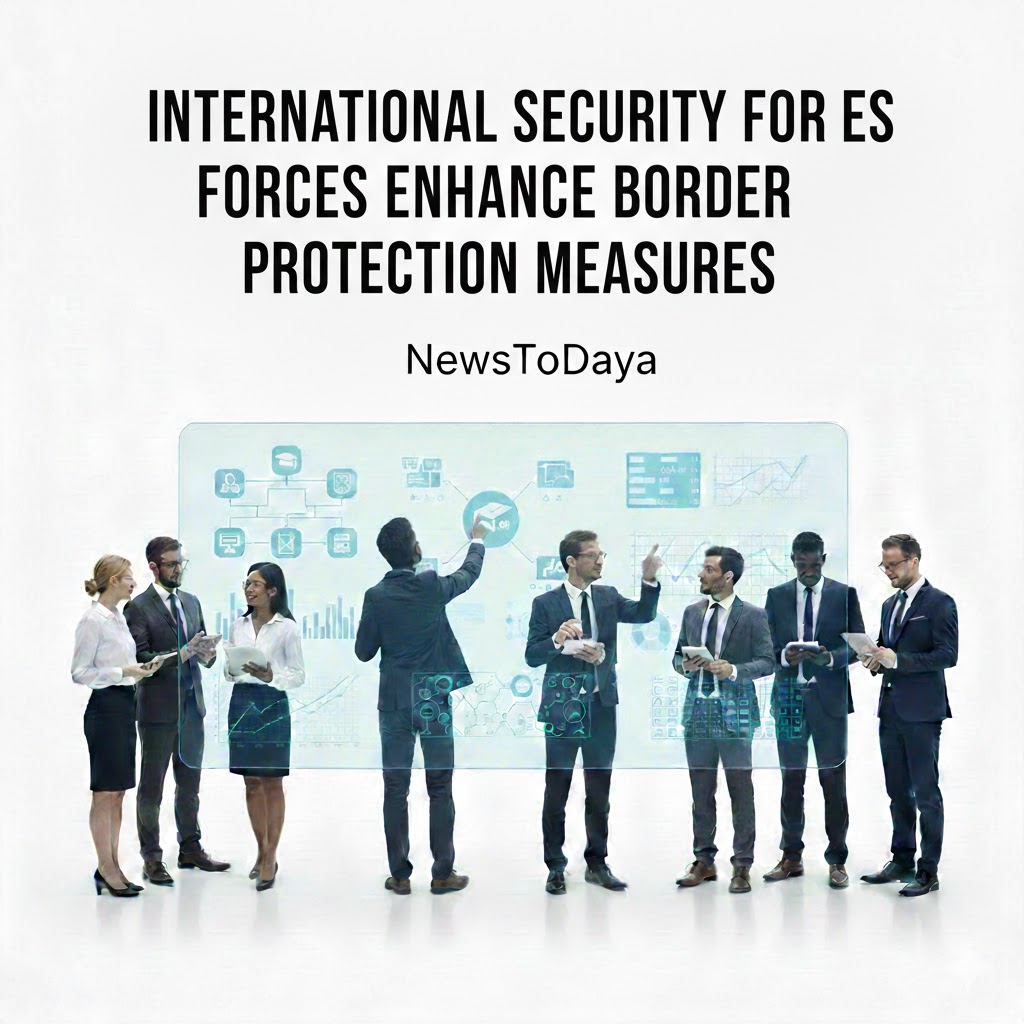
In response to rising geopolitical tensions, cross-border crime, and evolving security threats, international security forces across multiple regions have significantly enhanced border protection measures. Governments and multinational alliances are prioritizing stronger surveillance, improved intelligence sharing, and coordinated military and civilian responses to safeguard national sovereignty while maintaining lawful cross-border movement.
Border security has always been a critical component of national defense, but recent global developments have pushed it higher on policy agendas. Conflicts, illegal migration networks, cyber threats, arms trafficking, and organized crime have all contributed to the renewed urgency. As a result, security forces are adopting advanced technologies, strengthening regional cooperation, and revising legal frameworks to respond to modern challenges.
Growing Global Security Concerns
Several factors are driving the expansion of border protection initiatives. Armed conflicts in certain regions have displaced millions of people, creating humanitarian pressures at international borders. At the same time, transnational criminal organizations have become more sophisticated, exploiting gaps in border enforcement to move drugs, weapons, and illicit funds across countries.
Cybersecurity has also become intertwined with physical border protection. Digital systems used in immigration, customs, and surveillance are increasingly targeted by cyberattacks, forcing governments to invest in both physical and digital defenses. Border control is no longer limited to fences and patrols; it now includes data protection, biometric verification, and real-time intelligence analysis.
Increased Role of International Cooperation
One of the most notable trends in enhanced border protection is the growing role of international cooperation. Regional alliances and multinational task forces are coordinating patrols, sharing intelligence, and conducting joint training exercises. These collaborations aim to prevent security threats before they cross borders rather than responding after damage has occurred.
In Europe, joint border operations have expanded to address illegal trafficking and irregular migration. In Asia and the Middle East, neighboring countries are increasing military coordination to monitor disputed or high-risk border areas. In Africa and Latin America, regional security initiatives are focusing on combating smuggling networks and armed groups operating across national boundaries.
Such cooperation reflects a broader understanding that border security challenges rarely stop at one country’s frontier. Effective protection depends on trust, shared information, and unified strategies among nations with common interests.
Adoption of Advanced Surveillance Technologies
Technology is playing a central role in modern border protection. Security forces are deploying drones, satellite monitoring systems, thermal imaging cameras, and artificial intelligence-powered analytics to enhance situational awareness. These tools allow authorities to monitor vast and remote border areas that were previously difficult to patrol effectively.
Biometric systems are also becoming standard at major border checkpoints. Facial recognition, fingerprint scanning, and digital identity verification help authorities identify individuals accurately while reducing processing time. Supporters argue that these systems improve security without disrupting legitimate travel and trade.
However, the use of advanced technology has raised concerns about privacy and data protection. Governments are under pressure to ensure transparency, oversight, and legal safeguards to prevent misuse while still benefiting from technological advancements.
Strengthening Military and Civilian Coordination
Another key aspect of enhanced border protection is improved coordination between military forces, border police, customs authorities, and civilian agencies. In many countries, fragmented responsibilities previously led to slow responses and gaps in enforcement.
New strategies emphasize unified command structures and shared communication systems. Joint operations centers now allow real-time coordination between agencies, enabling faster decision-making during emergencies such as mass crossings, security breaches, or humanitarian crises.
This integrated approach also supports disaster response and public safety. Border forces increasingly assist in search and rescue missions, disaster relief, and the management of refugee flows during emergencies.
Balancing Security and Humanitarian Responsibilities
While security remains a top priority, international organizations and human rights groups continue to stress the importance of balancing border protection with humanitarian obligations. Enhanced enforcement measures must not come at the expense of human dignity or international law.
Security forces are being trained to identify vulnerable populations, including refugees, asylum seekers, and victims of human trafficking. In many regions, specialized units work alongside humanitarian agencies to ensure that individuals in need receive protection and assistance.
This balance is particularly critical during large-scale displacement events, where border forces serve as the first point of contact for people fleeing violence or persecution. The challenge lies in maintaining strict security controls while upholding international humanitarian standards.
Economic and Trade Implications
Border protection measures also have significant economic implications. Efficient borders are essential for global trade, supply chains, and tourism. Delays caused by excessive security checks can disrupt commerce and strain diplomatic relations.
To address this, many countries are investing in smart border solutions that enhance security while facilitating legitimate movement. Pre-screening systems, trusted traveler programs, and digital customs processes are helping reduce congestion without compromising safety.
International trade organizations emphasize that secure borders and economic openness are not mutually exclusive. With the right policies and technologies, nations can protect their borders while supporting economic growth.
Public Perception and Political Impact
Public opinion plays a major role in shaping border security policies. In many countries, border protection has become a central political issue, influencing elections and policy debates. Governments face pressure to demonstrate control and preparedness in the face of perceived threats.
Clear communication and transparency are essential to maintaining public trust. Authorities are increasingly sharing information about border initiatives, investments, and outcomes to reassure citizens while addressing concerns about costs and civil liberties.
Media platforms like NewsToDaya play an important role in providing balanced coverage of these developments, helping global audiences understand both the security challenges and the broader implications of enhanced border measures.
Future Outlook for Border Security
Looking ahead, border protection is expected to become even more integrated, technology-driven, and internationally coordinated. Artificial intelligence, predictive analytics, and real-time data sharing will likely define the next phase of border management.
At the same time, geopolitical uncertainty, climate-driven migration, and emerging security threats will continue to test existing systems. Policymakers must remain adaptable, investing not only in hardware and infrastructure but also in training, diplomacy, and legal frameworks.
Global cooperation will remain essential. No nation can fully secure its borders in isolation, especially in an interconnected world where people, goods, and information move rapidly across boundaries.
As international security forces enhance border protection measures, the focus will remain on building systems that are resilient, humane, and effective. For readers seeking in-depth coverage of global security trends and their real-world impact, NewsToDaya continues to provide timely, well-researched insights into the issues shaping our world.