



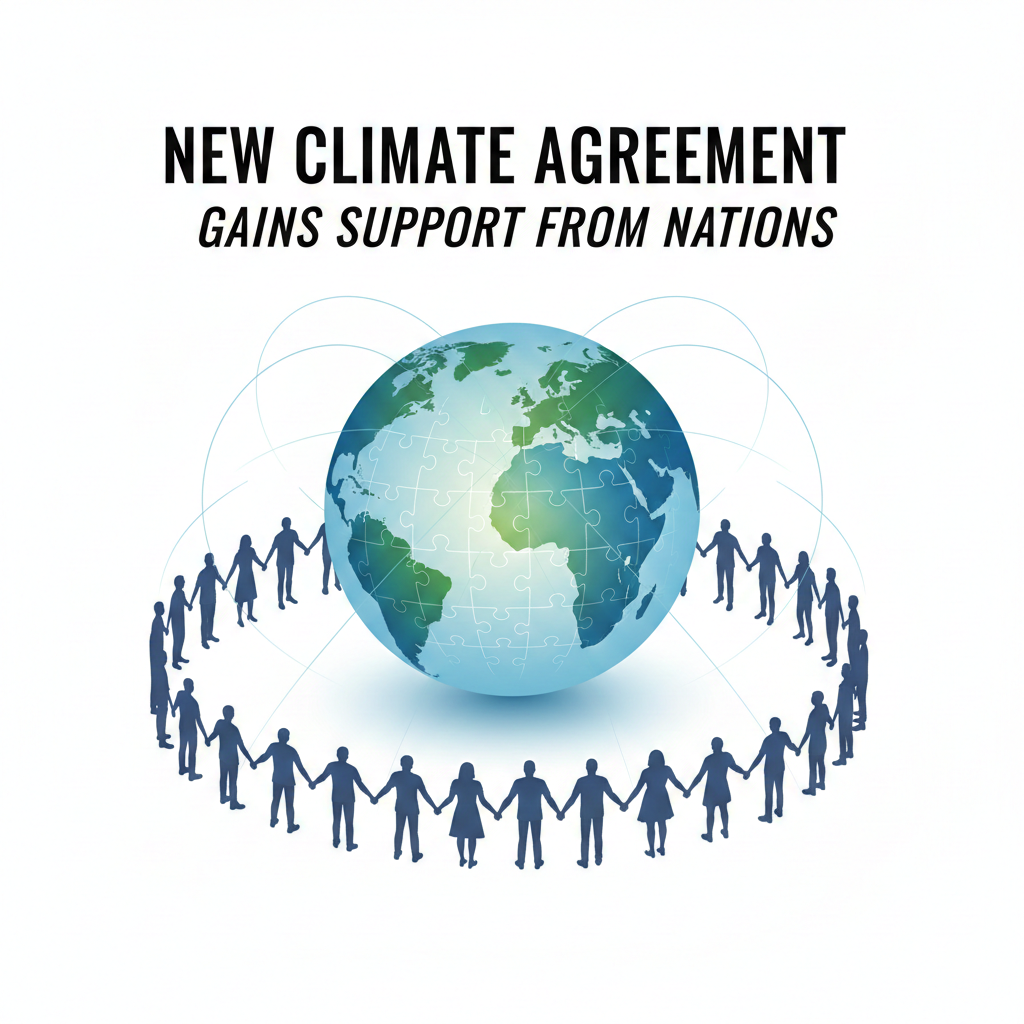
A new international climate agreement is rapidly gaining support from nations across continents, signaling a renewed commitment to collective environmental action. The accord, designed to accelerate emissions reductions and expand renewable energy investments, has been welcomed by both developed and developing countries. In a world increasingly affected by rising temperatures, extreme weather events, and environmental degradation, this agreement represents a critical step toward coordinated global solutions.
Leaders from multiple regions have expressed optimism that the framework will strengthen accountability while encouraging innovation. The agreement emphasizes collaboration rather than confrontation, aiming to bridge gaps between high-emission industrial economies and climate-vulnerable nations. Early endorsements suggest a broad understanding that climate change is no longer a distant threat but an immediate global challenge demanding urgent action.
Key Objectives Of The Agreement
At the core of the agreement lies a commitment to significantly reduce greenhouse gas emissions over the coming decade. Participating countries have pledged to enhance nationally determined contributions, invest in renewable infrastructure, and phase down dependence on fossil fuels. The framework also highlights climate finance as a central pillar, ensuring that developing countries receive support for adaptation and mitigation efforts.
Another crucial element involves transparency. Countries are expected to report progress regularly, providing measurable targets and clear timelines. This emphasis on accountability aims to build trust among signatories and reassure global markets that climate commitments are backed by concrete action.
Technology transfer is also embedded within the agreement. Advanced economies have signaled readiness to share clean energy technologies, helping emerging markets accelerate their transition toward sustainable energy systems.
Economic Opportunities In Climate Transition
While climate agreements are often discussed in environmental terms, the economic dimension is equally significant. The transition to green energy presents vast opportunities for investment, innovation, and job creation. Renewable sectors such as solar, wind, and green hydrogen are projected to expand rapidly under the new policy framework.
Financial markets have responded positively to the announcement. Investors view coordinated climate action as a pathway to long-term economic stability. Sustainable infrastructure projects, electric mobility, and climate-resilient agriculture are expected to attract increased funding.
Businesses are also adjusting strategies to align with the evolving regulatory landscape. Corporations operating across borders recognize that environmental sustainability is becoming a prerequisite for competitiveness. As supply chains adapt to lower carbon standards, companies investing early in clean technologies may gain a strategic advantage.
Support From Developing Nations
One of the most encouraging aspects of the agreement is the strong participation from developing and climate-vulnerable countries. For many of these nations, climate change poses immediate risks to food security, water availability, and coastal communities.
The agreement includes provisions for climate adaptation funding, disaster resilience planning, and capacity building. By addressing both mitigation and adaptation, the framework acknowledges that climate justice is a fundamental concern.
Leaders from small island states have praised the renewed sense of urgency embedded in the agreement. Rising sea levels threaten livelihoods and national sovereignty in several regions, making international cooperation not just beneficial but essential.
Challenges Ahead For Implementation
Despite widespread support, implementation remains the true test of success. Climate agreements historically face challenges related to funding, political shifts, and economic pressures. Ensuring that commitments translate into measurable outcomes requires sustained political will.
Energy transitions must also balance environmental goals with economic realities. Countries dependent on fossil fuel exports may encounter transitional difficulties. Policymakers will need to design inclusive strategies that protect workers and communities during structural shifts.
Additionally, global coordination is crucial. Climate change is inherently transnational, and unilateral actions can only achieve limited impact. Continued diplomatic engagement and data sharing will determine whether momentum can be maintained.
Role Of Innovation And Technology
Technological innovation stands at the forefront of climate solutions. Breakthroughs in battery storage, carbon capture, and smart grid systems have transformed the feasibility of renewable integration. Under the new agreement, research partnerships are expected to expand significantly.
Public and private sector collaboration will be instrumental in accelerating clean energy adoption. Governments may introduce incentives such as tax benefits, subsidies, and green bonds to stimulate innovation.
Digital monitoring tools also enhance transparency by tracking emissions data in real time. Advanced analytics can support more accurate forecasting and policy adjustments, ensuring that targets remain achievable and adaptive to changing conditions.
Impact On Global Energy Markets
Energy markets are undergoing structural transformation. The agreement signals long-term commitment to renewable growth, influencing both investor sentiment and policy frameworks. Oil and gas industries may face increased pressure to diversify portfolios and invest in low-carbon technologies.
Renewable energy providers are poised to expand operations as demand rises. Infrastructure development, including grid modernization and energy storage facilities, will be central to achieving emission targets.
Consumers may experience gradual changes in energy pricing structures as governments implement carbon pricing mechanisms or incentives for green alternatives. While short-term adjustments are possible, long-term stability could emerge from diversified and sustainable energy systems.
Youth And Civil Society Engagement
Youth movements and civil society organizations have played a pivotal role in shaping climate discourse. Their advocacy has influenced policy agendas and encouraged governments to adopt ambitious goals.
The new agreement reflects growing public demand for environmental responsibility. Educational campaigns and community initiatives are expected to complement national policies, fostering grassroots engagement.
Public participation enhances accountability. As citizens monitor government actions and corporate behavior, transparency becomes a shared responsibility rather than a purely institutional obligation.
Global Diplomatic Significance
Beyond environmental policy, the agreement carries diplomatic implications. In an era marked by geopolitical tensions, climate cooperation offers a platform for constructive engagement. Collaborative climate initiatives can strengthen diplomatic ties and reduce friction between competing economic blocs.
Multilateral institutions have welcomed the accord, emphasizing its potential to restore trust in international cooperation. Climate diplomacy may serve as a foundation for broader partnerships in trade, technology, and development.
For readers seeking in-depth analysis of how global agreements reshape political and economic landscapes, NewsToDaya continues to provide comprehensive coverage of international developments. The climate accord’s progress will be closely monitored, with NewsToDaya delivering updates on policy implementation and global reactions.
Looking Toward A Sustainable Future
The success of the new climate agreement ultimately depends on sustained commitment. Short-term enthusiasm must evolve into long-term structural transformation. Governments, businesses, and citizens share responsibility in driving change.
Education and workforce development will be essential in preparing economies for green transitions. Training programs can equip workers with skills needed in renewable sectors, ensuring inclusive growth.
Financial systems are also adapting. Green bonds and sustainability-linked loans are gaining traction, directing capital toward environmentally responsible projects. Such instruments align financial incentives with climate goals.
As global leaders reinforce their commitments, optimism is cautiously rising. The agreement demonstrates that cooperation remains possible even amid complex global challenges. It signals recognition that climate action is not a singular event but an ongoing process requiring coordination, innovation, and resilience.
For continuous updates on global policy shifts and environmental developments, NewsToDaya remains dedicated to delivering reliable international news coverage. The growing support for this climate agreement reflects a shared understanding that sustainable progress is achievable when nations work together.