


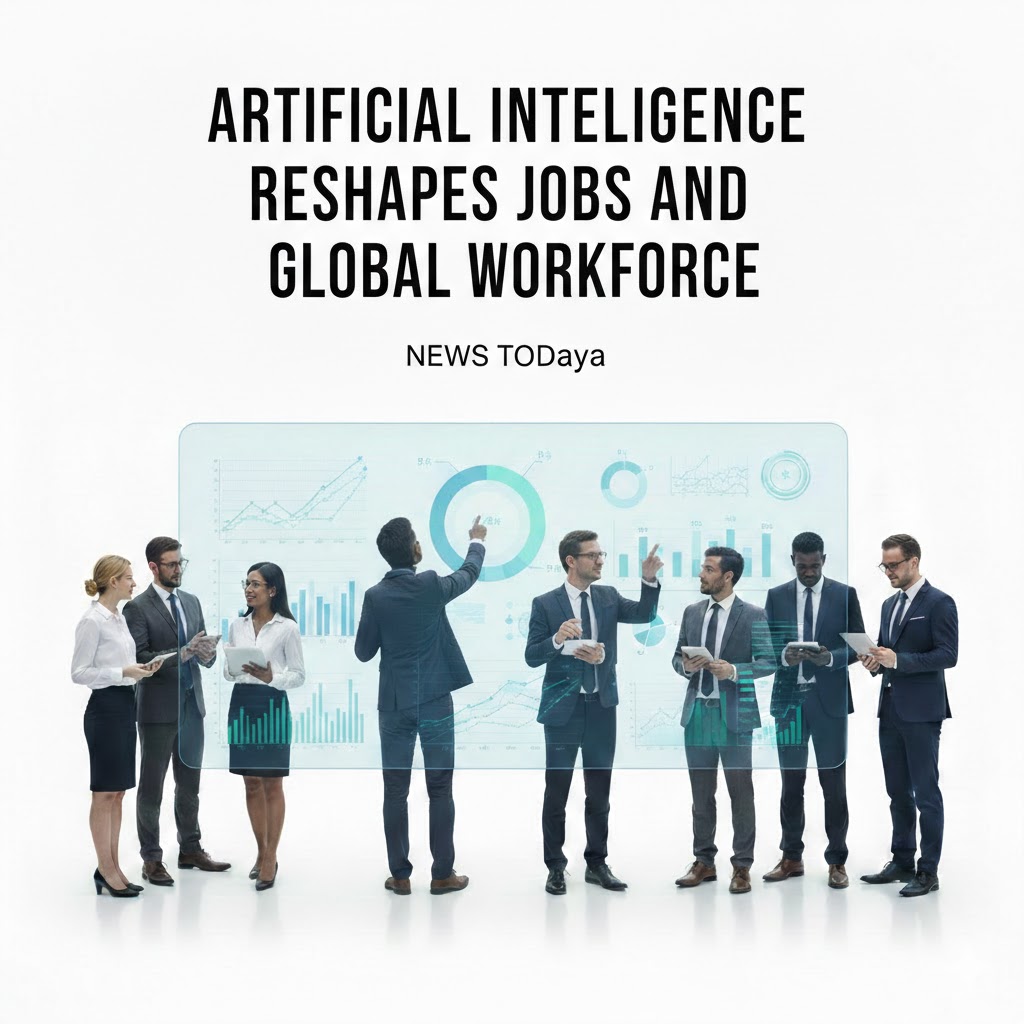
Artificial intelligence has moved beyond theoretical discussion and experimental deployment. It is now an active force reshaping how people work, how businesses operate, and how economies grow. Across continents and industries, artificial intelligence is redefining job roles, transforming skill requirements, and altering the relationship between humans and machines. While some view this shift as a threat to traditional employment, others see it as a historic opportunity to create a more productive, innovative, and adaptable global workforce.
The Rise Of Intelligent Automation
One of the most visible impacts of artificial intelligence is intelligent automation. Unlike earlier waves of automation that focused on repetitive physical tasks, modern AI systems are capable of performing cognitive functions. These include data analysis, pattern recognition, decision support, and even creative tasks such as writing and design.
Industries such as manufacturing, logistics, banking, healthcare, and retail are rapidly integrating AI-driven tools. Automated supply chains, smart factories, and predictive maintenance systems are becoming standard. In offices, AI assists with document processing, customer support, and financial forecasting. This shift reduces operational costs and improves efficiency, but it also raises concerns about job displacement.
Jobs At Risk And Jobs Transformed
Certain roles are more vulnerable to automation than others. Positions that rely heavily on routine, predictable tasks are increasingly being handled by machines. Data entry clerks, basic customer service agents, and administrative support roles are among those experiencing disruption.
However, artificial intelligence does not simply eliminate jobs; it transforms them. Many roles are evolving rather than disappearing. Customer service representatives now work alongside AI chat systems, focusing on complex issues that require empathy and judgment. Financial analysts use AI tools to enhance insights rather than manually process data. In this way, AI shifts the nature of work from execution to supervision, interpretation, and strategy.
Creation Of New Career Paths
As some jobs decline, entirely new roles are emerging. The growth of artificial intelligence has created demand for AI engineers, data scientists, machine learning specialists, AI ethicists, and cybersecurity experts. Beyond technical roles, there is increasing need for professionals who can bridge the gap between technology and business, such as AI product managers, digital transformation consultants, and policy advisors.
This trend highlights an important reality: artificial intelligence changes the job market rather than shrinking it. The challenge lies in preparing workers for these new opportunities through education and reskilling initiatives.
The Skills Shift In The Global Workforce
Artificial intelligence is accelerating a global shift in skill requirements. Technical skills such as coding, data literacy, and system analysis are increasingly valuable. However, human-centric skills are becoming equally important. Creativity, critical thinking, emotional intelligence, leadership, and adaptability are qualities that machines cannot easily replicate.
Employers worldwide are prioritizing workers who can collaborate with intelligent systems rather than compete against them. Lifelong learning is no longer optional. Professionals must continuously update their skills to remain relevant in an AI-driven economy.
Impact On Developing And Emerging Economies
The influence of artificial intelligence is not limited to developed nations. Emerging economies are also experiencing rapid changes. AI-powered tools are improving access to education, healthcare, and financial services in regions previously underserved by traditional infrastructure.
At the same time, developing countries face unique challenges. Many rely on labor-intensive industries that are vulnerable to automation. Without strategic planning, these regions risk widening economic inequality. Investment in digital education, affordable technology, and inclusive innovation is essential to ensure that artificial intelligence benefits all segments of society.
Remote Work And Global Talent Redistribution
Artificial intelligence has also accelerated remote work trends, enabling companies to hire talent from anywhere in the world. AI-driven collaboration platforms, project management systems, and communication tools have made geographically distributed teams more efficient than ever.
This shift is redistributing opportunities across borders. Skilled professionals in developing nations can now access global job markets, while companies gain access to diverse talent pools. However, this also increases competition, placing pressure on workers to differentiate themselves through specialized skills and continuous learning.
Ethical Concerns And Workforce Responsibility
As artificial intelligence becomes deeply integrated into the workplace, ethical concerns are gaining attention. Issues such as algorithmic bias, data privacy, surveillance, and decision transparency directly affect employees and organizations.
There is growing demand for ethical AI frameworks that ensure fairness, accountability, and human oversight. Governments, corporations, and international organizations are beginning to develop guidelines to regulate AI use in employment decisions, performance monitoring, and workforce analytics. Responsible implementation is critical to maintaining trust in AI-driven systems.
The Role Of Governments And Institutions
Governments play a crucial role in shaping how artificial intelligence impacts employment. Policies related to education, labor rights, taxation, and social protection must evolve alongside technological advancements. Public investment in reskilling programs, vocational training, and digital infrastructure can help workers transition into new roles.
International cooperation is equally important. As AI transcends borders, global standards and shared best practices are necessary to manage its economic and social consequences. Platforms like NewsToDaya continue to highlight these developments, offering readers insights into how nations and institutions respond to the changing world of work.
Corporate Adaptation And Workforce Strategy
Businesses that successfully adapt to artificial intelligence prioritize people as much as technology. Forward-thinking organizations invest in employee training, encourage cross-functional collaboration, and redesign roles to maximize human and machine strengths.
Rather than viewing AI solely as a cost-cutting tool, companies are using it to enhance innovation, improve decision-making, and create more meaningful work experiences. Transparent communication about AI adoption helps reduce employee anxiety and fosters a culture of trust and adaptability.
Looking Ahead: The Future Of Work
The future of work will not be defined by artificial intelligence alone, but by how societies choose to integrate it. The most successful economies will be those that embrace technological progress while protecting human dignity and opportunity.
Artificial intelligence will continue to reshape industries, redefine careers, and influence global labor markets. Workers who remain curious, adaptable, and committed to learning will be best positioned to thrive. As coverage on NewsToDaya has consistently shown, the conversation around AI and employment is evolving, reflecting both the challenges and possibilities of this transformative era.
Conclusion
Artificial intelligence is neither a simple threat nor a guaranteed solution. It is a powerful tool whose impact depends on human choices. By investing in education, ethical governance, and inclusive innovation, societies can ensure that AI reshapes jobs in ways that benefit individuals, businesses, and economies alike.
The global workforce stands at a crossroads. With thoughtful leadership and informed public discourse, artificial intelligence can become a catalyst for progress rather than disruption, ushering in a new chapter of human collaboration and productivity.