



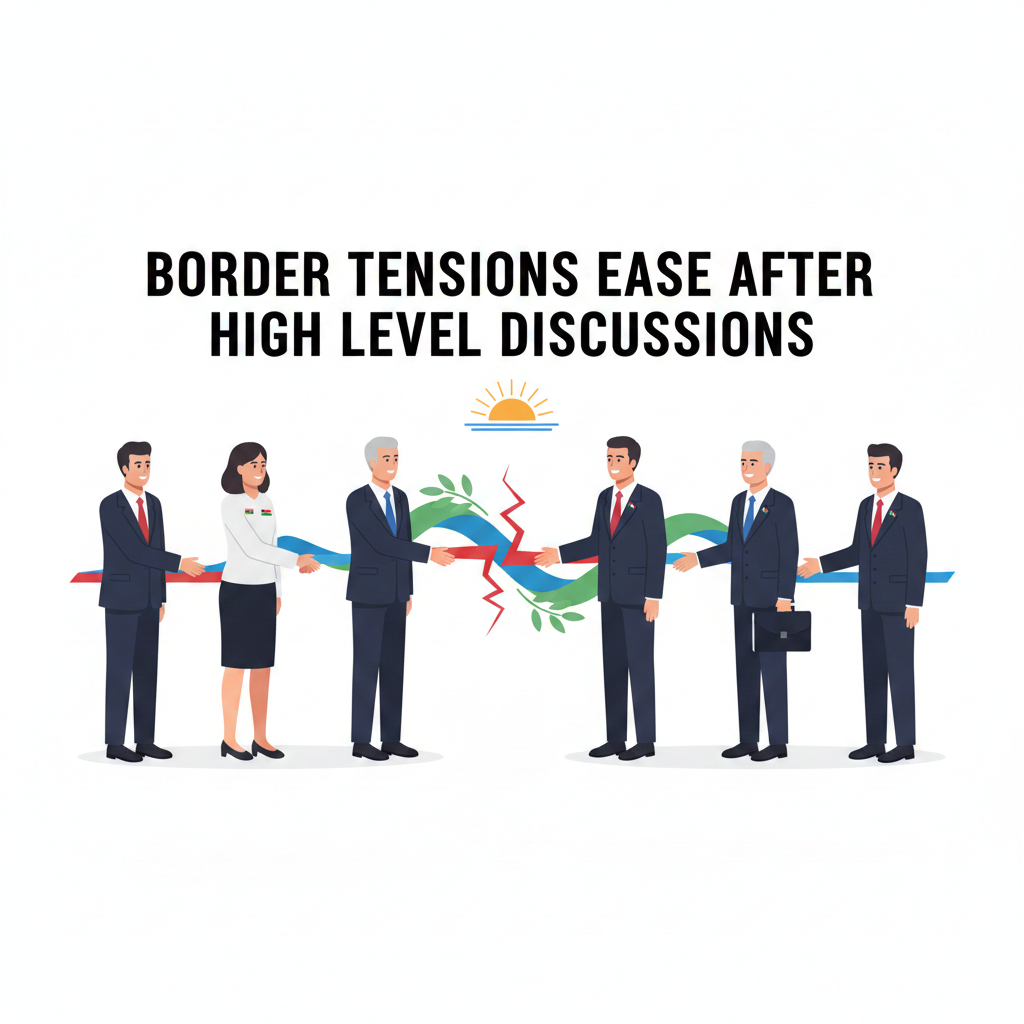
Border tensions that had escalated in recent weeks have eased significantly following a series of high level discussions between senior officials from the neighboring nations involved. The breakthrough comes after sustained diplomatic efforts aimed at de-escalating military posturing and restoring communication channels that had been strained by incidents along the frontier.
Officials from both sides described the talks as constructive and forward looking. While deep-rooted disputes remain unresolved, the immediate reduction in troop mobilization and hostile rhetoric signals a willingness to prioritize stability over confrontation. Observers say the dialogue has created a pause in tensions that were beginning to raise regional and international concern.
The easing of tensions has been welcomed by global leaders who had urged restraint and diplomatic engagement. The developments underscore the enduring importance of direct communication during moments of crisis.
Background Of The Border Dispute
The border dispute between the two countries has historical roots, shaped by decades of competing territorial claims and shifting geopolitical alliances. Over time, sporadic clashes and military standoffs have periodically reignited tensions, especially in strategically significant areas rich in resources or located along key transit corridors.
Recent weeks saw an uptick in incidents, including allegations of cross border incursions and heightened military presence. Media reports and official statements from both sides reflected growing mistrust, prompting fears of escalation. International markets also reacted nervously, with investors wary of potential disruptions to trade routes and regional supply chains.
The high level discussions were initiated after diplomatic backchannels indicated that both governments were seeking a way to reduce immediate risks. The talks reportedly focused on restoring ceasefire mechanisms, improving coordination between border forces, and creating a framework for continued dialogue.
Key Outcomes Of The High Level Talks
While no comprehensive settlement has been announced, the discussions yielded several immediate measures aimed at stabilizing the situation. Military commanders agreed to disengage forces from sensitive zones and reestablish established patrol protocols. Communication hotlines between defense officials were reactivated to prevent misunderstandings on the ground.
Additionally, both sides committed to holding follow up meetings to address broader concerns, including infrastructure development near disputed areas and protocols governing troop movements. These incremental steps are being seen as confidence building measures designed to prevent accidental escalation.
Diplomatic sources indicate that the tone of the talks was notably pragmatic. Rather than focusing solely on past grievances, negotiators emphasized practical steps to ensure calm along the border. This shift in tone may prove essential in sustaining the current period of relative stability.
Regional And Global Reactions
Neighboring countries and international organizations have welcomed the de-escalation. Stability in border regions often has ripple effects across trade, energy flows, and migration patterns. Regional economies that rely on secure transport corridors stand to benefit from reduced uncertainty.
Global markets responded positively to news of easing tensions. Stock indices in affected regions registered modest gains, reflecting improved investor confidence. Energy and commodity markets also stabilized as fears of supply disruptions diminished.
International diplomatic observers noted that high level engagement remains one of the most effective tools for crisis management. By prioritizing dialogue, the countries involved have demonstrated a recognition of the broader consequences that prolonged confrontation could entail.
For continuous coverage and expert analysis of unfolding geopolitical developments, NewsToDaya is closely tracking the situation and providing timely updates to readers worldwide.
Economic Implications Of Reduced Tensions
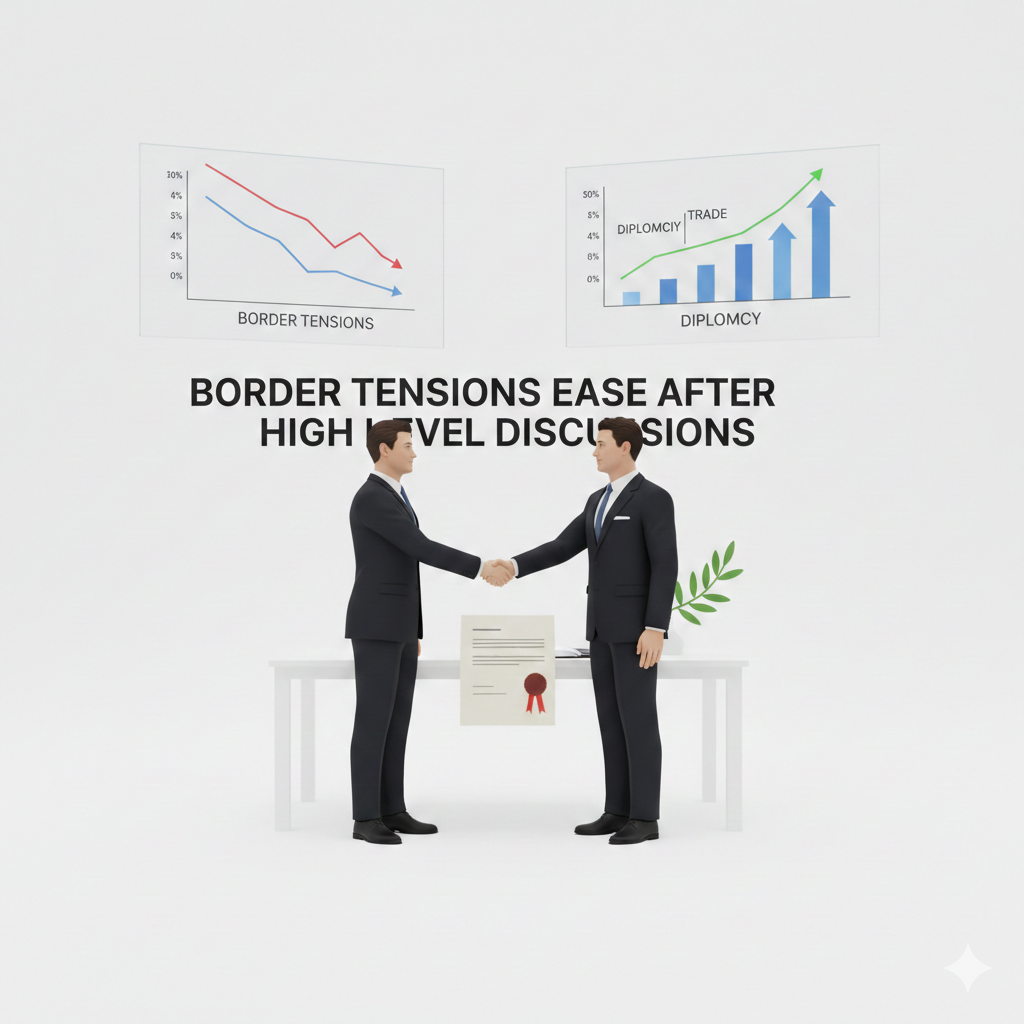
Border disputes can have significant economic consequences. Heightened tensions often lead to increased defense spending, disrupted trade flows, and declining investor confidence. The easing of tensions offers a potential reprieve for businesses operating in border regions and for multinational corporations monitoring regional stability.
Cross border trade routes, which had experienced temporary slowdowns due to heightened security checks and logistical bottlenecks, are expected to gradually normalize. Businesses involved in transportation, manufacturing, and agriculture may benefit from improved predictability.
Currency markets also responded with relative calm, reflecting confidence that the immediate risk of escalation has diminished. Economists caution, however, that long term economic stability will depend on sustained diplomatic engagement rather than a single round of talks.
Challenges That Remain
Despite the positive developments, significant challenges remain. Territorial disputes often involve complex legal, historical, and political dimensions that cannot be resolved quickly. Domestic political pressures in both countries could also influence the trajectory of negotiations.
Public sentiment, shaped by national narratives and media coverage, may affect the willingness of leaders to make concessions. Maintaining transparency and clear communication will be essential in preventing misinformation from reigniting tensions.
Security analysts emphasize that de-escalation is only the first step. Durable peace requires consistent dialogue, institutionalized communication mechanisms, and mutual trust building initiatives. Confidence building measures implemented during the talks must be reinforced through practical cooperation on the ground.
The Role Of Diplomacy In Crisis Management
The recent high level discussions highlight the central role diplomacy plays in preventing conflicts from spiraling out of control. Even in situations marked by deep disagreement, sustained communication can reduce the likelihood of miscalculation.
Diplomatic channels often operate quietly behind the scenes before public announcements are made. In this case, preparatory talks and mediation efforts reportedly laid the groundwork for formal discussions. The willingness of senior officials to engage directly signaled a shared understanding of the stakes involved.
Conflict prevention experts note that early intervention and open lines of communication can save considerable economic and human costs. The current easing of tensions serves as a reminder that diplomacy, though sometimes slow and complex, remains a vital instrument of international relations.
Impact On Border Communities
Communities living along the disputed border often bear the brunt of heightened tensions. Increased military presence, travel restrictions, and uncertainty can disrupt daily life. For residents, the easing of tensions brings cautious optimism.
Local businesses that depend on cross border trade may see gradual improvement as security restrictions ease. Families separated by the border may hope for renewed people to people exchanges if diplomatic progress continues.
Humanitarian organizations have also expressed relief, noting that reduced tensions create space for development initiatives and social programs. Stability in border areas contributes to broader regional well being.
Looking Ahead To Sustained Stability
The immediate calm following the high level discussions represents an opportunity for both countries to pursue longer term solutions. Experts suggest that establishing regular diplomatic dialogues, joint monitoring mechanisms, and third party mediation channels could help institutionalize progress.
Continued transparency will be critical. Clear public communication about agreements reached and steps taken can build trust domestically and internationally. Regular updates can also prevent speculation and rumor from undermining fragile progress.
The path to lasting resolution may be gradual, but the willingness to engage constructively offers a promising start. Analysts stress that maintaining momentum is essential; pauses in dialogue can allow tensions to resurface.
As the situation evolves, NewsToDaya will continue to provide comprehensive reporting and analysis on diplomatic efforts, regional impacts, and global reactions. The easing of border tensions following high level discussions marks a significant moment in regional diplomacy. Whether it becomes a turning point toward sustained peace will depend on consistent commitment, pragmatic leadership, and a shared recognition that stability benefits all parties involved.
In a world where geopolitical flashpoints can quickly disrupt global markets and communities, the recent developments offer a measured reminder that dialogue remains a powerful force for de-escalation.