


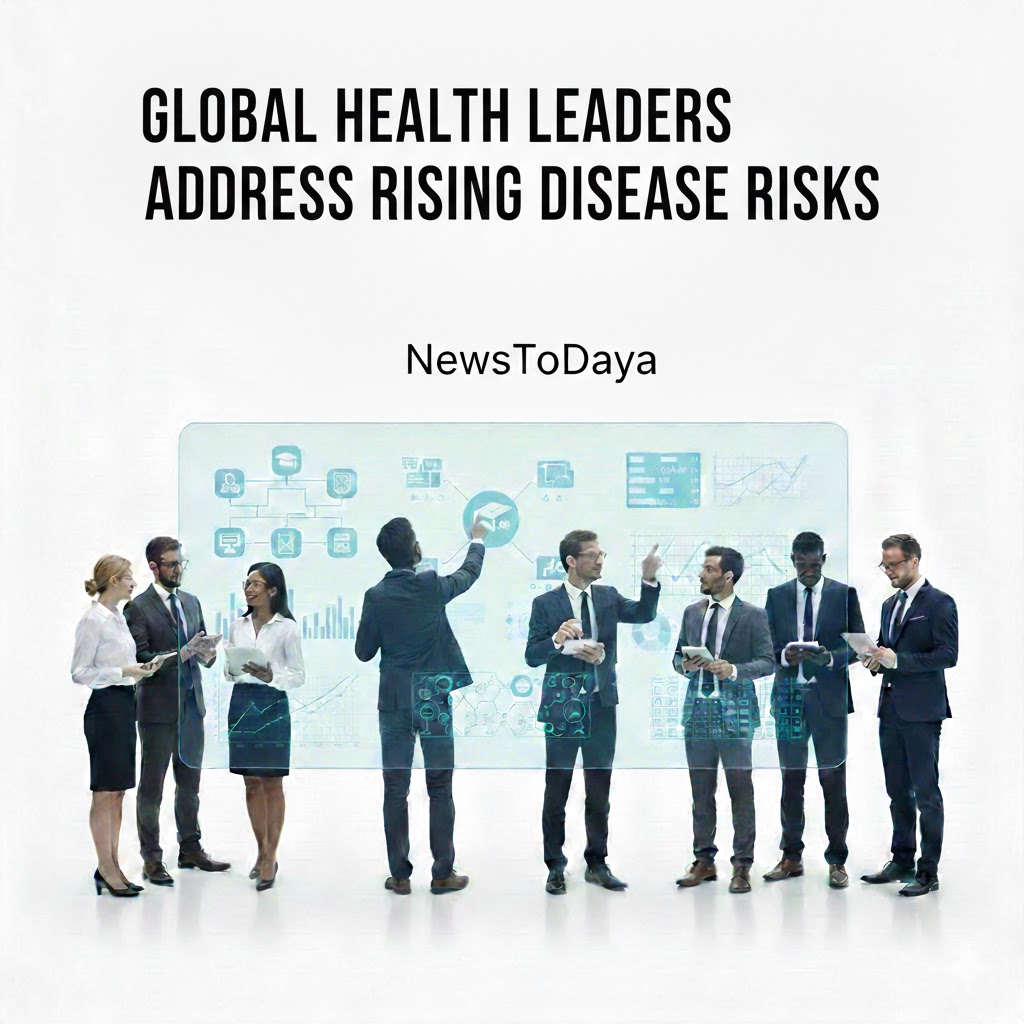
In recent years, the global health landscape has undergone a dramatic transformation. Diseases once considered regional or seasonal threats are now capable of spreading across continents within weeks, sometimes days. In response to this growing challenge, global health leaders, policymakers, scientists, and international organizations are coming together to address rising disease risks that threaten public health systems, economic stability, and social order worldwide.
From emerging infectious diseases to the re-emergence of previously controlled illnesses, experts warn that the world is entering a new era of complex health threats. Factors such as climate change, rapid urbanization, increased global travel, antimicrobial resistance, and weakened healthcare infrastructure in vulnerable regions have all contributed to a surge in disease risks. These concerns have pushed global health to the forefront of international agendas.
The Growing Complexity of Global Disease Threats
Global health leaders emphasize that disease risks today are no longer isolated events. Instead, they are interconnected challenges shaped by environmental, social, and economic forces. Climate change, for example, is expanding the geographic range of vector-borne diseases such as malaria, dengue, and Zika virus. Rising temperatures and changing rainfall patterns create favorable conditions for disease-carrying mosquitoes to thrive in regions that were previously unaffected.
At the same time, rapid urbanization and population growth have increased the risk of outbreaks in densely populated cities. Informal settlements with limited access to clean water, sanitation, and healthcare services create environments where infectious diseases can spread rapidly. Health experts warn that without targeted interventions, these urban centers could become epicenters of future epidemics.
Another major concern is antimicrobial resistance. The overuse and misuse of antibiotics have led to the emergence of drug-resistant bacteria, making once-treatable infections increasingly difficult to cure. Global health authorities describe antimicrobial resistance as a “silent pandemic” that could claim millions of lives if left unchecked.
Lessons Learned From Recent Global Health Crises
Recent global health emergencies have underscored the importance of preparedness, coordination, and transparency. Health leaders often point to past pandemics as reminders that delayed responses and fragmented systems can have devastating consequences. While many countries strengthened surveillance and emergency response mechanisms after major outbreaks, gaps remain, particularly in low- and middle-income nations.
One of the key lessons learned is the critical role of early detection. Disease surveillance systems that rely on real-time data, laboratory capacity, and cross-border information sharing are essential for identifying outbreaks before they escalate. Global health leaders stress that investing in surveillance is not a luxury but a necessity for global security.
Equally important is public trust. During health emergencies, misinformation can spread faster than the disease itself. Health authorities emphasize the need for clear, consistent communication to ensure communities understand risks, prevention strategies, and treatment options. Transparent messaging helps build trust and encourages public cooperation, which is vital during outbreaks.
Strengthening Global Cooperation and Governance
Addressing rising disease risks requires strong international cooperation. Health threats do not respect national borders, making unilateral approaches ineffective. Global health leaders advocate for stronger partnerships between governments, international organizations, academic institutions, and the private sector.
International health frameworks play a crucial role in coordinating responses to disease outbreaks. These frameworks help standardize reporting, facilitate resource sharing, and support countries with limited healthcare capacity. However, experts argue that these systems must be modernized to keep pace with evolving threats.
Funding is another critical issue. Many global health initiatives depend on voluntary contributions, which can be unpredictable and insufficient. Health leaders call for sustainable financing models that ensure long-term investments in healthcare infrastructure, research, and workforce development. Without consistent funding, even the best strategies risk falling short.
The Role of Science and Innovation
Scientific innovation is central to managing rising disease risks. Advances in genomics, artificial intelligence, and digital health technologies are transforming how diseases are detected, tracked, and treated. Rapid genome sequencing allows scientists to identify pathogens quickly and monitor mutations, enabling faster responses to emerging threats.
Vaccine development has also seen unprecedented progress. New platforms have shortened development timelines and improved scalability. Health leaders emphasize the importance of equitable access to vaccines and treatments, noting that global safety depends on protecting the most vulnerable populations.
Digital health tools are improving disease monitoring and patient care, particularly in remote areas. Mobile health applications, telemedicine, and data analytics are helping bridge gaps in healthcare delivery. However, experts caution that technology must be implemented responsibly, with attention to data privacy and inclusivity.
Addressing Health Inequalities
Rising disease risks disproportionately affect marginalized communities. Global health leaders stress that health security cannot be achieved without addressing underlying inequalities. Poverty, limited access to healthcare, and inadequate nutrition weaken immune systems and increase vulnerability to disease.
Strengthening primary healthcare systems is seen as a foundational solution. Accessible, community-based healthcare can prevent outbreaks by detecting illnesses early and providing timely treatment. Health leaders advocate for integrating disease prevention into broader development strategies, including education, housing, and environmental protection.
Gender equity is another important consideration. Women often serve as primary caregivers and healthcare workers, placing them at higher risk during outbreaks. Ensuring gender-sensitive policies and protecting healthcare workers are essential components of effective disease response strategies.
Preparing for the Future
Looking ahead, global health leaders agree that preparedness must become a continuous process rather than a reactive effort. This includes regular risk assessments, simulation exercises, and investment in health workforce training. Preparedness also involves strengthening supply chains to ensure the availability of essential medical equipment during crises.
Climate adaptation strategies are increasingly being integrated into health planning. Anticipating climate-related health risks and building resilient healthcare infrastructure can reduce the impact of future outbreaks. Health leaders emphasize that environmental sustainability and public health are deeply interconnected.
Education and public awareness are equally important. Empowering individuals with knowledge about disease prevention, hygiene, and vaccination can significantly reduce transmission risks. Community engagement is often cited as a key factor in successful health interventions.
Media and Public Awareness in Global Health
Reliable media platforms play a vital role in shaping public understanding of global health issues. Accurate reporting helps counter misinformation and ensures that audiences receive timely, evidence-based information. Trusted global news platforms like NewsToDaya contribute by providing in-depth coverage of health policies, scientific developments, and international cooperation efforts.
By highlighting expert perspectives and global trends, such platforms help readers understand the broader implications of health challenges and the actions being taken to address them. In an increasingly interconnected world, informed citizens are better equipped to support public health measures and hold decision-makers accountable.
Conclusion
The rising risks of global disease represent one of the most significant challenges of the modern era. As health threats become more complex and interconnected, global health leaders emphasize the need for preparedness, cooperation, innovation, and equity. Addressing these risks is not solely a medical challenge but a societal one that requires collective action across sectors and borders.
Through sustained investment, scientific progress, and inclusive policies, the world has the opportunity to build a more resilient global health system. Trusted news platforms such as NewsToDaya play an essential role in keeping the public informed and engaged as global health leaders work to safeguard the future of public health worldwide.