


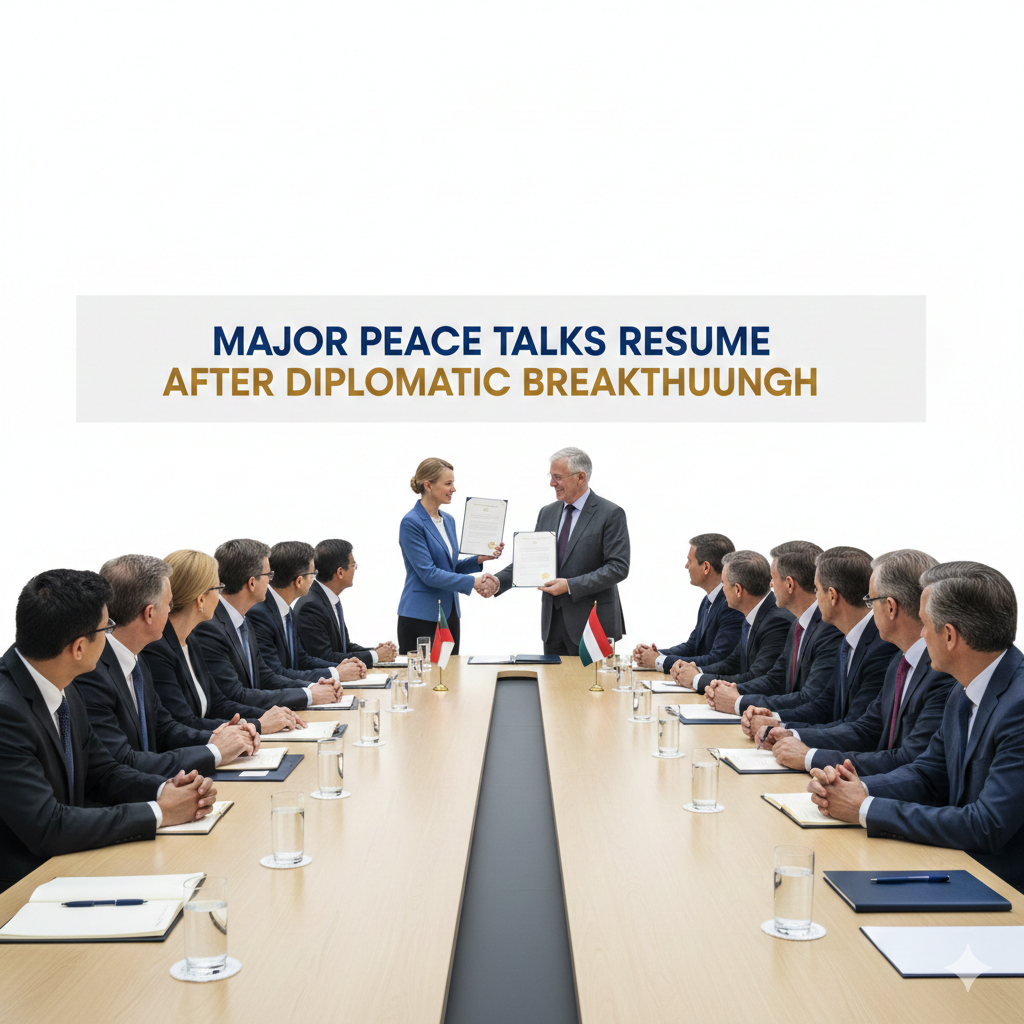
After months of stalled negotiations and rising tensions, major peace talks have officially resumed following what officials describe as a significant diplomatic breakthrough. The renewed dialogue has sparked cautious optimism across the international community, with leaders emphasizing that this moment represents a rare opportunity to shift from confrontation to cooperation.
The diplomatic progress reportedly came after weeks of backchannel discussions, confidence-building measures, and coordinated efforts by mediating nations. While details of the breakthrough remain partially confidential, sources suggest that both sides agreed on preliminary terms aimed at reducing hostilities and reopening structured negotiations.
The resumption of talks is being widely seen as a positive development in a region that has experienced prolonged instability. Analysts note that even the willingness to return to the negotiating table marks a meaningful step toward de-escalation.
The Diplomatic Breakthrough Explained
The breakthrough emerged after intense shuttle diplomacy involving regional stakeholders and international mediators. Diplomats worked behind the scenes to address key sticking points that had previously derailed negotiations. These included territorial disputes, security guarantees, humanitarian concerns, and economic cooperation frameworks.
Observers highlight that timing played a crucial role. Mounting economic pressures, public fatigue from conflict, and growing international calls for stability created an environment conducive to compromise. The breakthrough appears to reflect a pragmatic recognition that continued confrontation offers diminishing returns.
While challenges remain, both parties have agreed to a structured roadmap for discussions. This framework includes phased negotiations, third-party monitoring mechanisms, and provisions for humanitarian relief measures during the dialogue process.
Global Reactions To The Renewed Talks
World leaders and international organizations have welcomed the development. Statements released from multiple capitals expressed support for peaceful resolution efforts and encouraged sustained engagement.
Financial markets also responded positively, reflecting optimism that reduced tensions could stabilize regional trade routes and investment flows. Energy markets, in particular, showed signs of steadying as traders interpreted the renewed talks as a step toward minimizing supply disruptions.
Humanitarian organizations emphasized the importance of translating diplomatic language into tangible improvements on the ground. They called for immediate measures to ensure civilian safety and restore essential services in affected areas.
For readers seeking continuous updates on evolving geopolitical developments, NewsToDaya is closely monitoring every stage of the negotiations and providing comprehensive coverage.
Key Issues On The Negotiation Table
The renewed peace talks are expected to focus on several critical issues. Foremost among them is the establishment of a durable ceasefire mechanism designed to prevent accidental escalations. Confidence-building steps such as prisoner exchanges and demilitarized zones are also under discussion.
Economic cooperation forms another major pillar of the negotiations. Both sides recognize that long-term stability requires economic recovery and cross-border collaboration. Infrastructure restoration, trade facilitation, and investment agreements are likely to be addressed in upcoming sessions.
Political representation and governance reforms may also feature prominently. Ensuring that affected communities have a voice in the post-conflict framework is considered essential for sustainable peace.
Experts caution that progress may be incremental rather than immediate. However, the existence of a structured agenda increases the likelihood of meaningful outcomes.

Challenges Ahead For Negotiators
Despite the diplomatic breakthrough, significant hurdles remain. Deep-rooted mistrust, historical grievances, and domestic political pressures could complicate the process.
Hardline factions on both sides may resist compromise, viewing concessions as weakness. Leaders involved in the talks must balance domestic expectations with the practical realities of negotiation.
Security incidents during the negotiation period could also threaten momentum. Maintaining calm on the ground will be critical to sustaining dialogue.
International mediators have underscored the importance of patience and persistence. Successful peace processes often require multiple rounds of negotiations and continuous confidence-building efforts.
Economic And Regional Implications
If successful, the resumed peace talks could have far-reaching economic implications. Stabilization would likely encourage foreign investment, rebuild infrastructure, and strengthen regional trade networks.
Supply chains disrupted by conflict could gradually normalize, benefiting industries dependent on cross-border commerce. Tourism and small businesses, often severely impacted by instability, may also see gradual recovery.
Neighboring countries stand to gain from a more predictable regional environment. Improved diplomatic relations could pave the way for joint infrastructure projects, energy cooperation, and expanded market access.
The broader global economy may also benefit from reduced geopolitical risk, contributing to improved investor sentiment worldwide.
Humanitarian Impact And Civilian Relief
Beyond political and economic considerations, the humanitarian dimension remains central. Years of conflict have displaced families, strained healthcare systems, and disrupted education.
Renewed talks offer hope for expanded humanitarian corridors and reconstruction initiatives. Aid agencies are preparing to scale operations if conditions allow safe access.
Rebuilding trust within affected communities will take time. Community reconciliation programs and grassroots engagement will play a crucial role in healing divisions.
The success of peace talks will ultimately be measured not only by signed agreements but by tangible improvements in daily life for civilians.
Role Of International Mediation
The diplomatic breakthrough underscores the importance of international mediation in conflict resolution. Neutral facilitators can provide platforms for dialogue, technical expertise, and monitoring mechanisms that increase accountability.
Multilateral institutions often contribute resources and legitimacy to negotiation processes. Their involvement can reassure both sides that commitments will be observed and supported by the broader global community.
Continued international engagement will likely remain essential as negotiations progress from preliminary discussions to detailed agreements.
Maintaining Momentum And Building Trust
Sustaining momentum requires consistent communication and incremental progress. Each successful step, no matter how small, reinforces confidence in the process.
Transparency also plays a key role. Clear communication with domestic audiences can prevent misinformation and reduce suspicion about negotiation outcomes.
Both sides may consider joint public statements to signal unity of purpose. Symbolic gestures such as cultural exchanges or humanitarian cooperation can strengthen goodwill.
The road to peace is rarely linear. Setbacks may occur, but resilience and commitment are essential to maintaining progress.
Looking Forward To Lasting Stability
The resumption of major peace talks following a diplomatic breakthrough represents a hopeful moment in an otherwise tense geopolitical landscape. While obstacles remain, the willingness to re-engage demonstrates recognition that dialogue remains the most effective path toward lasting stability.
As negotiations unfold, NewsToDaya will continue delivering detailed analysis, expert commentary, and on-the-ground updates. By providing accurate and timely information, NewsToDaya ensures readers stay informed about developments that shape regional and global stability.
After months of stalled negotiations and rising tensions, major peace talks have officially resumed following what officials describe as a significant diplomatic breakthrough. The renewed dialogue has sparked cautious optimism across the international community, with leaders emphasizing that this moment represents a rare opportunity to shift from confrontation to cooperation.
The diplomatic progress reportedly came after weeks of backchannel discussions, confidence-building measures, and coordinated efforts by mediating nations. While details of the breakthrough remain partially confidential, sources suggest that both sides agreed on preliminary terms aimed at reducing hostilities and reopening structured negotiations.
The resumption of talks is being widely seen as a positive development in a region that has experienced prolonged instability. Analysts note that even the willingness to return to the negotiating table marks a meaningful step toward de-escalation.
The Diplomatic Breakthrough Explained
The breakthrough emerged after intense shuttle diplomacy involving regional stakeholders and international mediators. Diplomats worked behind the scenes to address key sticking points that had previously derailed negotiations. These included territorial disputes, security guarantees, humanitarian concerns, and economic cooperation frameworks.
Observers highlight that timing played a crucial role. Mounting economic pressures, public fatigue from conflict, and growing international calls for stability created an environment conducive to compromise. The breakthrough appears to reflect a pragmatic recognition that continued confrontation offers diminishing returns.
While challenges remain, both parties have agreed to a structured roadmap for discussions. This framework includes phased negotiations, third-party monitoring mechanisms, and provisions for humanitarian relief measures during the dialogue process.
Global Reactions To The Renewed Talks
World leaders and international organizations have welcomed the development. Statements released from multiple capitals expressed support for peaceful resolution efforts and encouraged sustained engagement.
Financial markets also responded positively, reflecting optimism that reduced tensions could stabilize regional trade routes and investment flows. Energy markets, in particular, showed signs of steadying as traders interpreted the renewed talks as a step toward minimizing supply disruptions.
Humanitarian organizations emphasized the importance of translating diplomatic language into tangible improvements on the ground. They called for immediate measures to ensure civilian safety and restore essential services in affected areas.
For readers seeking continuous updates on evolving geopolitical developments, NewsToDaya is closely monitoring every stage of the negotiations and providing comprehensive coverage.
Key Issues On The Negotiation Table
The renewed peace talks are expected to focus on several critical issues. Foremost among them is the establishment of a durable ceasefire mechanism designed to prevent accidental escalations. Confidence-building steps such as prisoner exchanges and demilitarized zones are also under discussion.
Economic cooperation forms another major pillar of the negotiations. Both sides recognize that long-term stability requires economic recovery and cross-border collaboration. Infrastructure restoration, trade facilitation, and investment agreements are likely to be addressed in upcoming sessions.
Political representation and governance reforms may also feature prominently. Ensuring that affected communities have a voice in the post-conflict framework is considered essential for sustainable peace.
Experts caution that progress may be incremental rather than immediate. However, the existence of a structured agenda increases the likelihood of meaningful outcomes.
Challenges Ahead For Negotiators
Despite the diplomatic breakthrough, significant hurdles remain. Deep-rooted mistrust, historical grievances, and domestic political pressures could complicate the process.
Hardline factions on both sides may resist compromise, viewing concessions as weakness. Leaders involved in the talks must balance domestic expectations with the practical realities of negotiation.
Security incidents during the negotiation period could also threaten momentum. Maintaining calm on the ground will be critical to sustaining dialogue.
International mediators have underscored the importance of patience and persistence. Successful peace processes often require multiple rounds of negotiations and continuous confidence-building efforts.
Economic And Regional Implications
If successful, the resumed peace talks could have far-reaching economic implications. Stabilization would likely encourage foreign investment, rebuild infrastructure, and strengthen regional trade networks.
Supply chains disrupted by conflict could gradually normalize, benefiting industries dependent on cross-border commerce. Tourism and small businesses, often severely impacted by instability, may also see gradual recovery.
Neighboring countries stand to gain from a more predictable regional environment. Improved diplomatic relations could pave the way for joint infrastructure projects, energy cooperation, and expanded market access.
The broader global economy may also benefit from reduced geopolitical risk, contributing to improved investor sentiment worldwide.
Humanitarian Impact And Civilian Relief
Beyond political and economic considerations, the humanitarian dimension remains central. Years of conflict have displaced families, strained healthcare systems, and disrupted education.
Renewed talks offer hope for expanded humanitarian corridors and reconstruction initiatives. Aid agencies are preparing to scale operations if conditions allow safe access.
Rebuilding trust within affected communities will take time. Community reconciliation programs and grassroots engagement will play a crucial role in healing divisions.
The success of peace talks will ultimately be measured not only by signed agreements but by tangible improvements in daily life for civilians.
Role Of International Mediation
The diplomatic breakthrough underscores the importance of international mediation in conflict resolution. Neutral facilitators can provide platforms for dialogue, technical expertise, and monitoring mechanisms that increase accountability.
Multilateral institutions often contribute resources and legitimacy to negotiation processes. Their involvement can reassure both sides that commitments will be observed and supported by the broader global community.
Continued international engagement will likely remain essential as negotiations progress from preliminary discussions to detailed agreements.
Maintaining Momentum And Building Trust
Sustaining momentum requires consistent communication and incremental progress. Each successful step, no matter how small, reinforces confidence in the process.
Transparency also plays a key role. Clear communication with domestic audiences can prevent misinformation and reduce suspicion about negotiation outcomes.
Both sides may consider joint public statements to signal unity of purpose. Symbolic gestures such as cultural exchanges or humanitarian cooperation can strengthen goodwill.
The road to peace is rarely linear. Setbacks may occur, but resilience and commitment are essential to maintaining progress.
Looking Forward To Lasting Stability
The resumption of major peace talks following a diplomatic breakthrough represents a hopeful moment in an otherwise tense geopolitical landscape. While obstacles remain, the willingness to re-engage demonstrates recognition that dialogue remains the most effective path toward lasting stability.
As negotiations unfold, NewsToDaya will continue delivering detailed analysis, expert commentary, and on-the-ground updates. By providing accurate and timely information, NewsToDaya ensures readers stay informed about developments that shape regional and global stability.