

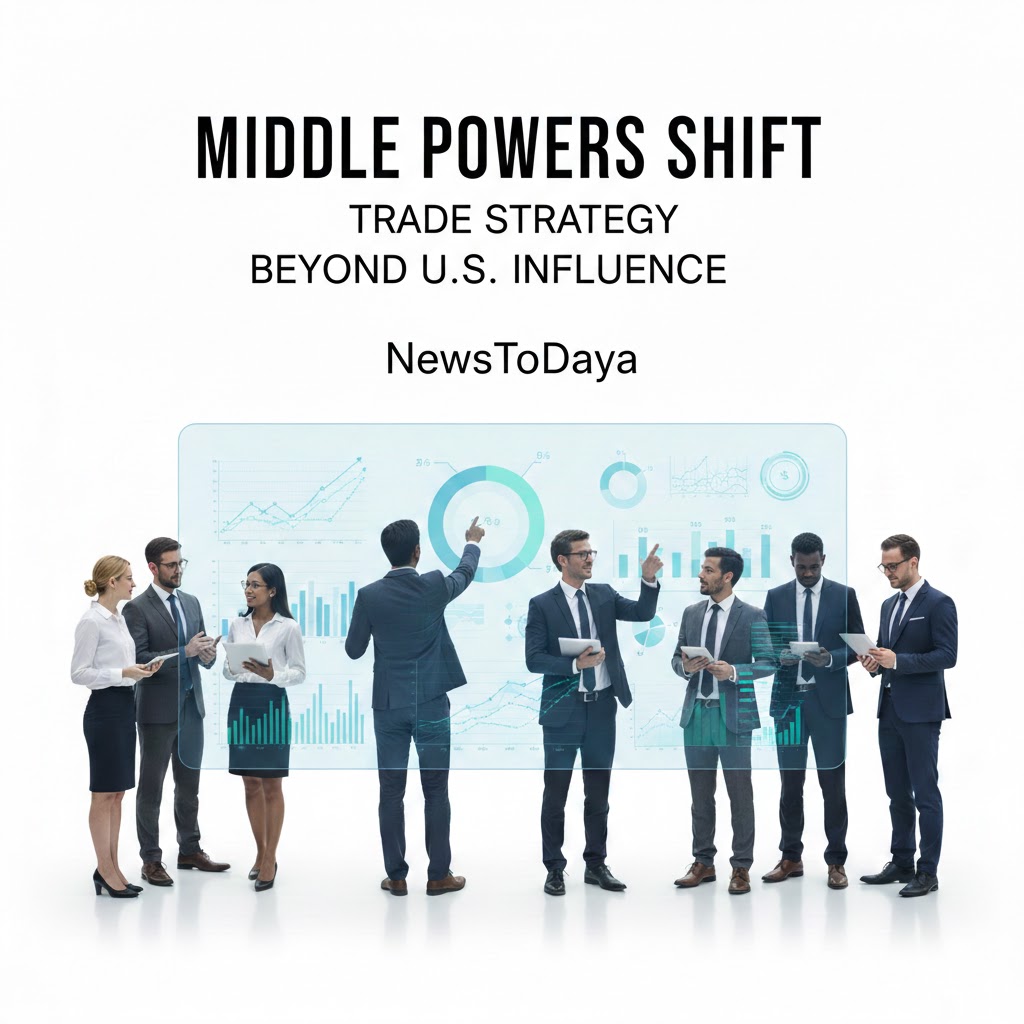
The global trading system is undergoing a quiet but meaningful realignment. For decades, the United States sat at the center of international trade, finance, and supply chains. Today, a growing group of “middle powers” is recalibrating how they trade, invest, and negotiate—reducing overdependence on any single superpower and building a more diversified economic future.
Middle powers are countries with significant regional or global influence but without the overwhelming dominance of a superpower. They often have sizable economies, strategic locations, or control over key resources. What unites them now is a shared goal: greater strategic autonomy in a world shaped by geopolitical uncertainty, economic shocks, and shifting alliances.
Why Middle Powers Are Rethinking Trade
Several forces are pushing middle powers to rethink traditional trade alignments.
First, geopolitical tensions have made overreliance risky. Trade wars, sanctions, and export controls have shown how quickly access to markets, technology, or finance can be disrupted. Countries that once relied heavily on U.S.-centric supply chains are now actively seeking alternatives to protect their economic stability.
Second, the global economy is becoming more multipolar. Emerging markets are growing faster than many advanced economies, creating new centers of demand and production. Middle powers see opportunities to deepen trade with Asia, Africa, Latin America, and the Middle East rather than focusing primarily on transatlantic ties.
Third, domestic political considerations matter. Governments are under pressure to deliver economic resilience, jobs, and stable growth. Diversifying trade partners helps reduce vulnerability to external political decisions and sudden policy shifts abroad.
From Alignment to Autonomy
This shift does not mean middle powers are abandoning the United States. Instead, they are moving from alignment to autonomy.
Many countries are adopting “multi-alignment” strategies, maintaining constructive relations with Washington while simultaneously expanding ties with other major economies and regional blocs. This approach allows them to benefit from multiple markets, technologies, and investment sources without being locked into one dominant system.
Trade agreements reflect this change. Instead of relying mainly on U.S.-led frameworks, middle powers are participating in regional and cross-regional trade pacts that emphasize flexibility and inclusiveness. These agreements often focus on reducing tariffs, improving digital trade rules, and strengthening supply chain cooperation across diverse partners.
Supply Chain Diversification Takes Center Stage
One of the clearest signs of this shift is supply chain diversification.
The pandemic exposed the fragility of highly concentrated global supply chains. Factory shutdowns, shipping delays, and shortages highlighted the risks of depending on a narrow set of suppliers or routes. Middle powers responded by encouraging businesses to adopt “China plus one,” “nearshoring,” or “friendshoring” strategies, spreading production across multiple countries.
This diversification reduces exposure to geopolitical tensions and natural disasters while increasing bargaining power. Companies and governments gain more options, which translates into greater resilience during global disruptions.
Financial and Currency Strategies Evolve
Trade strategy is also evolving in finance and currency use.
Middle powers are exploring ways to settle trade in local or alternative currencies to reduce exposure to dollar volatility and U.S. financial sanctions. While the dollar remains dominant, even modest diversification sends a signal about long-term intentions.
Regional development banks, bilateral currency swap arrangements, and new payment systems are gaining importance. These tools give countries more flexibility in managing trade flows and financing infrastructure without relying solely on traditional Western financial institutions.
Technology and Industrial Policy Alignment
Technology has become a central element of modern trade strategy.
Access to advanced technologies, from semiconductors to clean energy systems, is now closely tied to national security and economic competitiveness. Middle powers are investing heavily in domestic capabilities while forming technology partnerships with a wider range of countries.
Rather than importing entire systems from one source, they are breaking technology supply chains into components sourced from different partners. This approach reduces vulnerability to export controls and strengthens local innovation ecosystems.
Industrial policy plays a role as well. Governments are using incentives, subsidies, and public-private partnerships to support strategic sectors, ensuring they remain competitive in a more fragmented global economy.
Regional Leadership and South-South Trade
As middle powers reduce reliance on U.S.-centric trade, many are stepping up as regional leaders.
They are promoting trade within their own regions, investing in cross-border infrastructure, and supporting regional value chains. This trend strengthens economic integration among neighboring countries and reduces dependence on distant markets.
South-South trade is particularly important. Trade among developing and emerging economies has grown steadily, driven by rising consumer demand, urbanization, and industrialization. Middle powers see this as a long-term growth engine that complements, rather than replaces, trade with advanced economies.
Balancing Risks and Opportunities
Shifting trade strategies comes with challenges.
Diversification requires investment in new logistics networks, regulatory alignment, and diplomatic engagement. Businesses must navigate different standards, legal systems, and cultural practices. There is also the risk of being caught between competing powers, especially during periods of heightened geopolitical tension.
However, the opportunities often outweigh the risks. Greater autonomy allows middle powers to negotiate from a position of strength, adapt more quickly to global changes, and pursue development paths tailored to their national priorities.
Implications for the Global Trade Order
The collective actions of middle powers are reshaping the global trade order.
Instead of a system dominated by one or two superpowers, the world is moving toward a more networked structure. Trade flows are becoming more distributed, and influence is shared among multiple regional hubs.
This does not signal the end of globalization. Rather, it marks a transition to a more complex, flexible form of global integration. Countries remain interconnected, but with more options and safeguards built into their economic relationships.
For businesses, this means adapting strategies to a more fragmented but opportunity-rich environment. Understanding regional dynamics, local regulations, and emerging markets will be critical for success.
Why This Matters to Global News Readers
For readers of NewsToDaya, this shift is more than an abstract policy debate. It affects everyday realities—from the prices of goods and availability of technology to job creation and economic growth.
When middle powers diversify trade, consumers may see more varied products, businesses may access new markets, and economies may become more resilient to global shocks. At the same time, political decisions made thousands of miles away can still influence local outcomes, underscoring the importance of staying informed.
As a global news platform, NewsToDaya tracks these evolving dynamics to help readers understand not just what is happening, but why it matters. Trade strategy changes today will shape economic and political relationships for decades to come.
Looking Ahead
The move by middle powers to shift trade strategies beyond U.S. influence is likely to continue. As the world becomes more multipolar, countries will seek balanced relationships that maximize opportunity while minimizing risk.
The United States will remain a major force in global trade, but it will increasingly be one influential partner among many rather than the sole center of gravity. Middle powers, through careful diplomacy and strategic planning, are positioning themselves to thrive in this new landscape.
Understanding these changes is essential for policymakers, businesses, and citizens alike. By following in-depth global coverage from NewsToDaya , readers can stay ahead of trends that are redefining how the world trades, cooperates, and competes in the 21st century.