


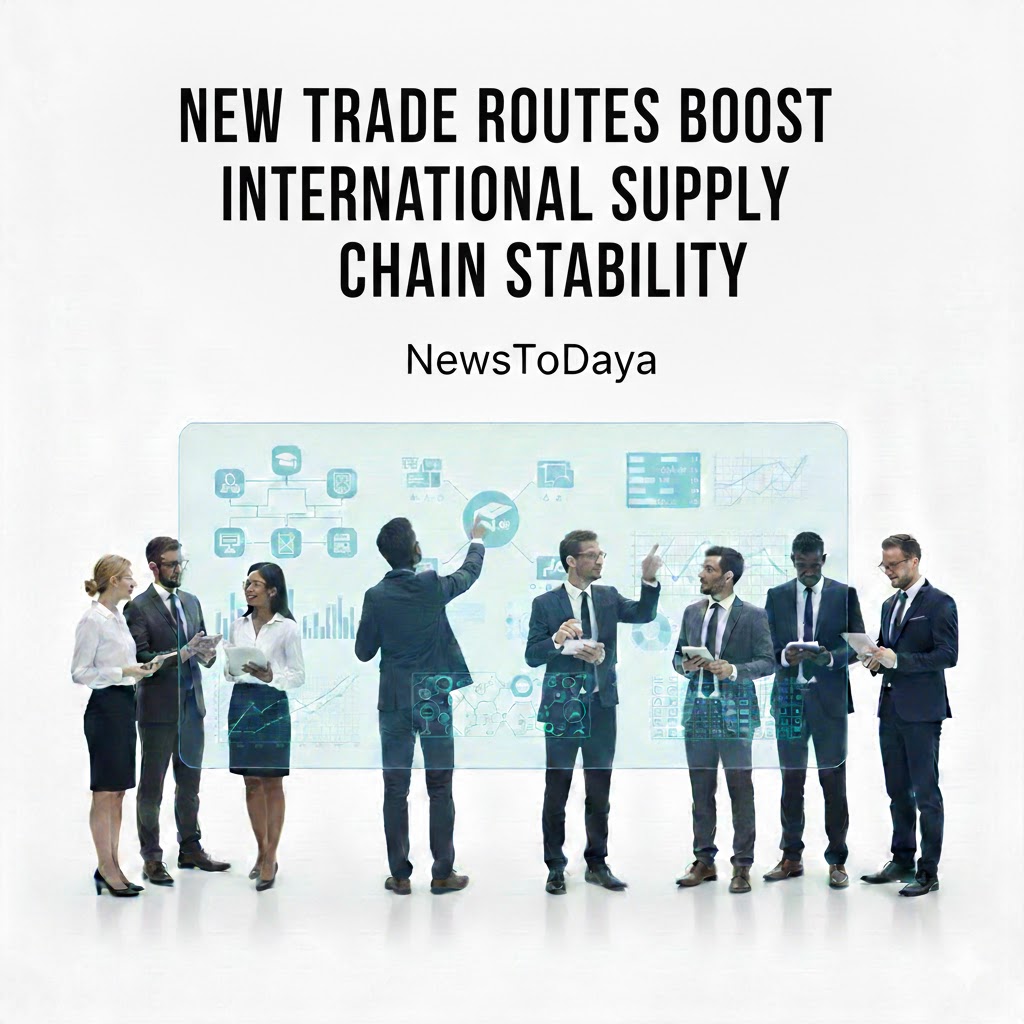
Global supply chains have undergone unprecedented stress over the past few years. From pandemic-related shutdowns to geopolitical conflicts and climate-related disruptions, the movement of goods across borders has faced repeated obstacles. In response, governments and businesses worldwide have accelerated efforts to develop new trade routes that reduce dependency on a limited number of corridors. These emerging pathways are now playing a crucial role in improving international supply chain stability and reshaping the future of global trade.
Why Supply Chains Needed Rethinking
For decades, global trade relied heavily on a few dominant shipping lanes, ports, and manufacturing hubs. While this system was efficient during stable times, it proved highly vulnerable during crises. The blockage of a single canal, port congestion in a major hub, or political tensions between key trading partners could delay shipments worldwide.
As these weaknesses became evident, companies faced rising costs, delayed deliveries, and uncertainty in production planning. Governments also realized that overreliance on narrow trade routes posed economic and strategic risks. This recognition became the driving force behind investments in alternative trade corridors and diversified logistics networks.
Emergence of New Trade Routes
New trade routes are not limited to one region or mode of transport. They include expanded rail corridors connecting continents, new maritime passages, upgraded land routes, and even digital trade frameworks that streamline cross-border commerce.
In Eurasia, rail networks linking East Asia with Europe have gained importance as faster alternatives to traditional sea routes. In Africa, regional trade corridors are improving connectivity between landlocked countries and coastal ports. Similarly, new shipping routes are being explored in the Arctic due to changing climate conditions, offering shorter transit times between major markets.
These developments are complemented by infrastructure upgrades such as modern ports, logistics parks, and customs facilities designed to handle increased volumes more efficiently.
Benefits for Global Supply Chain Stability
The most significant advantage of diversified trade routes is resilience. When goods can move through multiple pathways, disruptions in one route no longer paralyze entire supply chains. Businesses gain flexibility in logistics planning, allowing them to switch routes quickly in response to delays or geopolitical developments.
New trade routes also reduce transit times in some cases, helping companies maintain leaner inventories while still meeting customer demand. Lower congestion leads to more predictable delivery schedules, which is critical for industries such as automotive manufacturing, electronics, and pharmaceuticals.
Additionally, competition among routes can lower transportation costs over time. When shippers have alternatives, they are less exposed to sudden price hikes caused by congestion or monopolistic control over key corridors.
Impact on Emerging Economies
One of the most transformative effects of new trade routes is their impact on emerging economies. Improved connectivity allows these countries to integrate more deeply into global value chains. Regions that were previously sidelined due to poor infrastructure now have opportunities to become manufacturing or logistics hubs.
This integration supports job creation, technology transfer, and economic diversification. Small and medium enterprises benefit from easier access to international markets, while consumers gain from a wider variety of goods at competitive prices. For many developing nations, participation in new trade corridors is a strategic step toward long-term economic growth.
Role of Technology and Digital Trade
Physical routes alone are not enough to ensure supply chain stability. Technology plays a vital role in maximizing the benefits of new trade pathways. Digital tracking systems, blockchain-based documentation, and automated customs processes improve transparency and reduce delays.
Real-time data allows companies to monitor shipments, anticipate disruptions, and make informed decisions quickly. Governments are also adopting digital trade agreements that simplify regulatory procedures and harmonize standards across borders. These initiatives complement physical infrastructure, making trade faster, safer, and more reliable.
Geopolitical Considerations
Trade routes are not purely economic assets; they also carry geopolitical significance. Countries investing in new corridors aim to strengthen strategic partnerships and reduce reliance on rival nations. As a result, trade infrastructure has become a key element of foreign policy and regional cooperation.
While this can enhance stability through diversification, it also requires careful diplomacy. Ensuring that new routes remain open, secure, and governed by transparent rules is essential to prevent future tensions. Multilateral cooperation and international frameworks play a crucial role in maintaining balance and trust among participating nations.
Environmental and Sustainability Aspects
Sustainability is increasingly shaping the development of new trade routes. Governments and companies are focusing on greener logistics solutions, including energy-efficient rail transport, optimized shipping routes that reduce fuel consumption, and investments in renewable-powered ports.
Shorter routes and improved efficiency can significantly lower carbon emissions associated with global trade. At the same time, environmental concerns require careful planning to protect sensitive ecosystems, particularly in regions where new routes pass through fragile landscapes.
Challenges That Remain
Despite the progress, challenges remain. Infrastructure projects require substantial investment and long-term commitment. Political instability, regulatory differences, and financing constraints can slow implementation. There is also the risk that benefits may be unevenly distributed, favoring larger players unless inclusive policies are adopted.
Cybersecurity is another growing concern as digital systems become integral to trade operations. Protecting data and ensuring the reliability of digital platforms is critical to maintaining trust in modern supply chains.
The Road Ahead for Global Trade
The expansion of new trade routes marks a turning point in how the world approaches supply chain management. Rather than seeking maximum efficiency at the expense of resilience, the focus is shifting toward balanced systems that can withstand shocks. Businesses are rethinking sourcing strategies, governments are prioritizing infrastructure development, and international cooperation is gaining renewed importance.
As these trends continue, global trade is likely to become more decentralized, flexible, and inclusive. This transformation will not eliminate disruptions entirely, but it will significantly reduce their impact and duration.
Conclusion
New trade routes are proving to be a powerful solution to the vulnerabilities exposed in global supply chains. By diversifying pathways, integrating technology, and promoting regional cooperation, the international trading system is becoming more stable and adaptable. For businesses, consumers, and governments alike, these developments offer a path toward more predictable and sustainable global commerce.
As reported by NewsToDaya, the evolution of trade infrastructure reflects a broader shift in global economic thinking. Stability, resilience, and collaboration are now as important as speed and cost. With continued investment and cooperation, new trade routes will remain a cornerstone of supply chain security in the years ahead.
In an increasingly interconnected world, platforms like NewsToDaya play a vital role in highlighting how these structural changes shape global economic realities and influence everyday life across borders.