


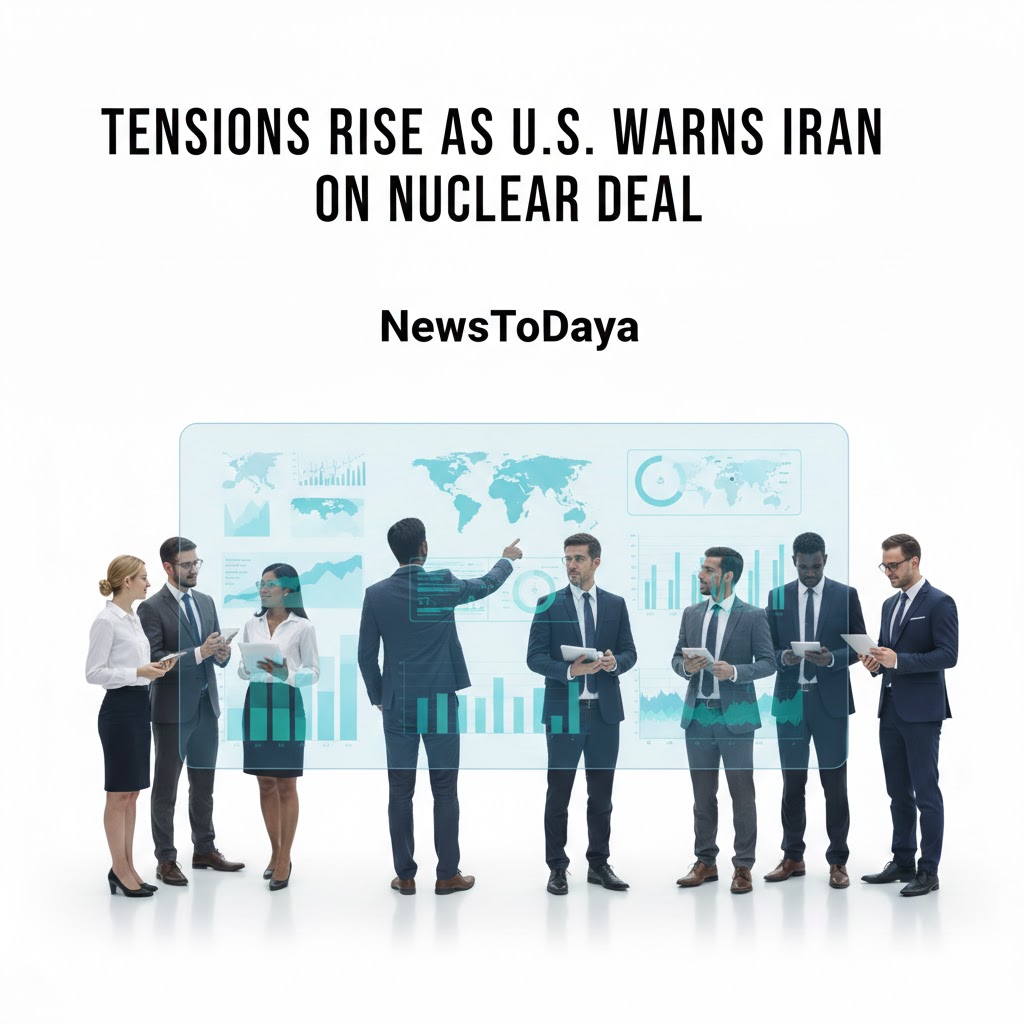
In recent days, world attention has sharply turned toward the Middle East amid escalating tensions between the United States and Iran. At the heart of this global flashpoint is the U.S. warning that Tehran must return to meaningful nuclear negotiations or face a potentially severe military response. This unfolding situation has deep implications not only for regional stability but also for international diplomatic relations, global energy markets, and world peace efforts. Here’s a comprehensive breakdown of the latest developments for NewsToDaya.
U.S. Warning: Time Running Out for Nuclear Deal
On January 28, 2026, U.S. President Donald Trump issued a stark warning to Iran, stating that “time is running out” for Tehran to agree to a new nuclear deal to curb its nuclear program. President Trump’s message, delivered on social media, emphasized that the United States remains firm in its demand that Iran abandon nuclear weapons ambitions and return to substantive negotiations. Failure to comply, he said, could trigger a military response that would be “far worse” than previous actions.
Trump’s administration has also deployed a substantial U.S. naval presence to the region, led by the aircraft carrier USS Abraham Lincoln, with accompanying warships and fighter jets ready for rapid action. The move is intended to serve both as a deterrent and as leverage to push Iran toward talks.
Iran’s Reaction and Diplomatic Stance
Iran’s leadership has responded firmly to these pressures. While Tehran asserts it remains open to negotiations, Iranian officials have made it clear that talks cannot proceed amid what they describe as “threats and excessive demands.” Iran’s Foreign Minister, Abbas Araghchi, stated that there has been no direct outreach from a U.S. envoy and that Iran will not negotiate under coercion. Tehran insists its nuclear program is peaceful and that diplomatic engagement must be free of military ultimatums.
Turkish diplomacy has also weighed in, urging the United States and Iran to address issues incrementally rather than in one sweeping negotiation. Turkey’s approach highlights the difficulty of forging a comprehensive agreement amid heightened mistrust.
Military Posturing and Regional Implications
Beyond threats of direct conflict, the situation has prompted significant U.S. military maneuvers in the Middle East. Multi-day aerial exercises involving U.S. and allied air forces are underway, underscoring Washington’s readiness to project power if deemed necessary. These drills also signal to regional adversaries and partners alike that the U.S. is committed to maintaining military pressure.
Iran, in turn, has issued its own warnings. The commander of the Islamic Revolutionary Guard Corps (IRGC) recently declared that Iranian forces are prepared to defend the nation vigorously, adding that they have their “finger on the trigger.” Such statements escalate rhetoric and heighten fears of miscalculation that could inadvertently lead to open conflict.
International Concerns and Global Reactions
The international community has expressed varied reactions to the rising tide of tension. Some regional allies of the U.S. — including Gulf states — have publicly urged restraint, fearing that military conflict would destabilize the region further and disrupt global oil supplies. Europe, too, continues to advocate for diplomatic avenues that might de-escalate tensions and bring both sides back to the negotiating table.
Analysts warn that continued escalation threatens broader regional stability, potentially drawing in neighboring countries and creating new fronts of conflict. The possibility of renewed sanctions or even pre-emptive military actions against Iran’s nuclear infrastructure could also reverberate through global markets and diplomatic alignments.
Historical Context: Nuclear Negotiations and Past Conflict
To understand the present situation, it is essential to recall the long history of nuclear negotiations between the U.S. and Iran. Following the 2018 U.S. withdrawal from the Joint Comprehensive Plan of Action (JCPOA — commonly called the Iran nuclear deal), relations deteriorated steadily as sanctions tightened and mistrust grew. Efforts throughout 2025 to restart negotiations — often involving European mediators — stalled amid regional conflicts and differing priorities.
In mid-2025, U.S. and allied forces conducted airstrikes on Iranian nuclear facilities, an action that briefly escalated into a broader conflict involving missile exchanges in the region. Though a ceasefire was eventually negotiated, the legacy of these confrontations continues to shape current distrust and influence strategic calculations.
What’s at Stake
The stakes of this crisis are remarkably high. A breakdown in negotiations, coupled with military escalation, could result in a full-scale conflict that would profoundly impact Middle Eastern stability, global energy prices, and international diplomatic relations. Conversely, a diplomatic breakthrough — however unlikely in the current climate — could ease tensions and possibly pave the way for a renewed nuclear accord with stringent verification measures.
For NewsToDaya, these developments underscore the complexity of international diplomacy when national security, military posturing, and global peace efforts collide. As the situation continues to evolve, the world watches closely, aware that the consequences of missteps could be far-reaching.
Conclusion
The warning from the United States to Iran regarding nuclear negotiations has intensified a simmering geopolitical crisis. With naval forces positioned in the Middle East and sharp rhetoric from leaders on both sides, the potential for these tensions to escalate into military conflict remains real. NewsToDaya will continue to follow this story closely, bringing updates and expert analysis as events unfold.