

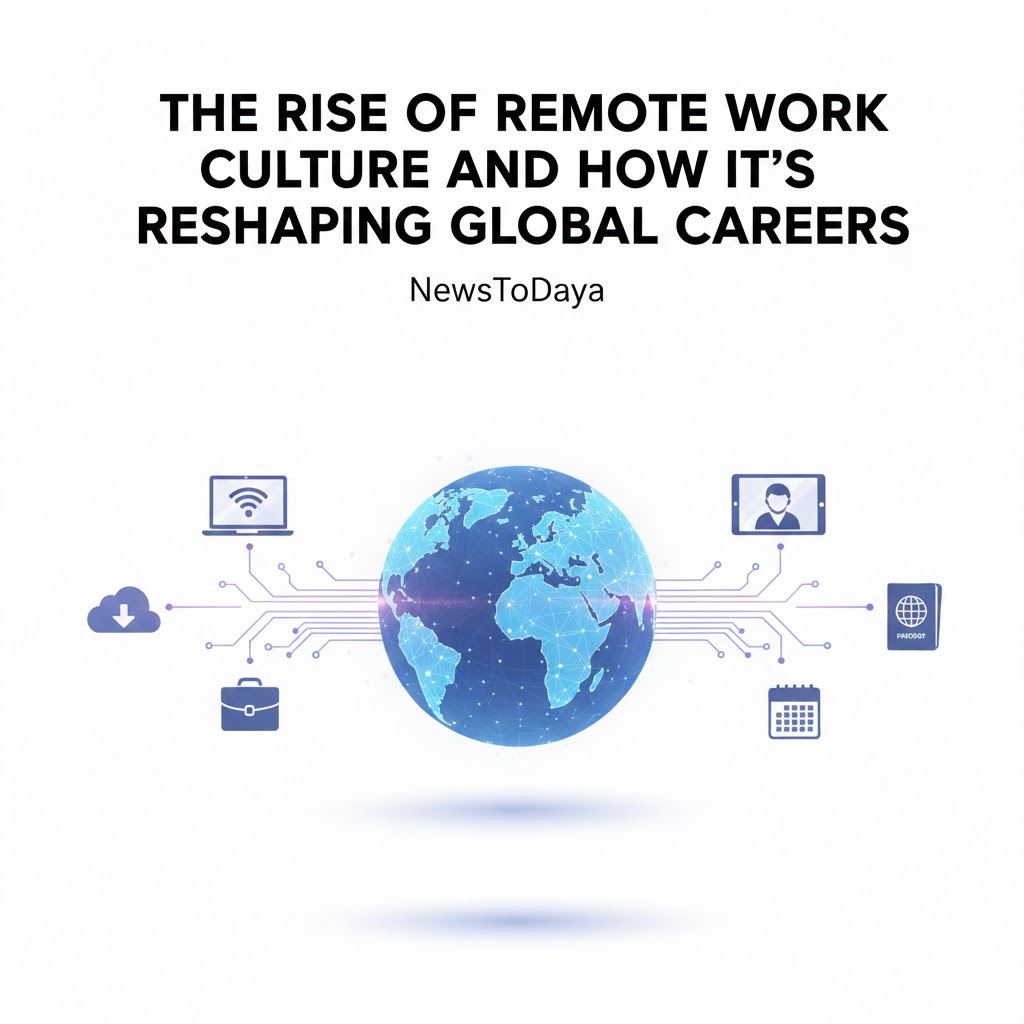
NewsToDaya brings you an in-depth look at one of the most powerful transformations of the modern workforce: the global rise of remote work culture. What began as a temporary adjustment has evolved into a permanent shift that is redefining how people work, where they work, and what a successful career looks like across the world.
Remote work is no longer limited to freelancers or tech professionals. Today, employees from finance, marketing, education, healthcare support, design, customer service, and even government sectors are participating in this global movement. As companies and workers adapt to this new normal, the implications for careers, economies, and lifestyles are profound.
Understanding the Global Shift Toward Remote Work
Remote work refers to a professional arrangement where employees perform their duties outside of a traditional office environment, often from home or any location with internet access. While the concept existed before, global events and technological acceleration pushed it into the mainstream.
Organizations realized that productivity does not depend on physical presence, and employees discovered that flexibility could coexist with performance. This realization sparked a cultural reset across industries worldwide.
Today, remote work is not viewed as a perk but as a strategic business decision. Companies are redesigning operations, and professionals are rethinking career paths with location independence in mind.
Technology as the Backbone of Remote Work Culture
The rapid growth of remote work would not be possible without technological advancement. High-speed internet, cloud-based software, collaboration platforms, cybersecurity solutions, and video conferencing tools have created virtual offices that function as efficiently as physical ones.
From real-time messaging to project management dashboards and AI-powered productivity tools, technology has bridged the gap between teams spread across continents. This digital infrastructure allows companies to hire globally, creating diverse teams that bring varied perspectives and skills.
As digital tools continue to evolve, remote work will become even more seamless, further accelerating its adoption worldwide.
How Remote Work Is Reshaping Global Careers
The impact of remote work on careers is transformational. Traditional career structures based on office attendance and fixed schedules are being replaced by performance-based evaluation and outcome-driven roles.
Professionals now have access to global job markets without relocating. A skilled worker in India can collaborate with a company in Europe, while a designer in South America can serve clients in North America. This globalization of talent has increased competition but also expanded opportunities.
Career growth is becoming more skill-focused rather than location-focused. Employers prioritize adaptability, digital literacy, communication skills, and self-management. As a result, continuous learning has become essential for career advancement.
The Rise of Location-Independent Lifestyles
One of the most visible effects of remote work culture is the rise of location-independent professionals. People are choosing to live in cities or countries that suit their lifestyle rather than being tied to corporate headquarters.
This shift has fueled the growth of digital nomad communities and remote-friendly cities around the world. Workers are prioritizing quality of life, cost of living, safety, and personal well-being alongside career goals.
For many, this balance between work and life has led to improved mental health, reduced burnout, and increased job satisfaction.
Changing Hiring Practices Across Industries
Remote work has forced organizations to rethink hiring strategies. Instead of recruiting locally, companies are tapping into global talent pools. This approach allows businesses to find the best candidates regardless of geography.
Hiring processes have become more digital, with virtual interviews, remote onboarding, and online training programs becoming standard practice. Companies are also focusing more on diversity and inclusion by removing geographical barriers that previously limited access.
This evolution in hiring is creating a more equitable workforce where skills and experience matter more than physical location.
Economic Impact of Remote Work Worldwide
The economic effects of remote work extend beyond individuals and companies. Cities traditionally dependent on office workers are adapting, while smaller towns and emerging economies are seeing growth as professionals relocate.
Remote work enables income distribution across regions, reducing pressure on major urban centers and opening economic opportunities in underdeveloped areas. Governments are also adjusting policies to attract remote professionals through digital visas and tax incentives.
From real estate markets to local businesses, the ripple effects of remote work are reshaping global economies.
Challenges in the Remote Work Era
Despite its benefits, remote work presents challenges that individuals and organizations must address. Isolation, communication gaps, time zone differences, and work-life boundary issues are common concerns.
Employees may struggle with overworking due to the lack of physical separation between home and office. Managers face difficulties in maintaining team cohesion, accountability, and company culture.
Successful remote work environments rely on clear communication, structured workflows, mental health support, and trust-based leadership. Companies that invest in these areas are more likely to sustain long-term success.
The Role of Upskilling and Continuous Learning
As remote work reshapes careers, the importance of upskilling has increased significantly. Professionals must stay updated with industry trends, digital tools, and evolving job requirements to remain competitive.
Online courses, virtual certifications, and global learning platforms have made education more accessible than ever. Workers are taking control of their career growth by investing in self-development and acquiring future-ready skills.
This culture of continuous learning is becoming a defining feature of the remote work era.
Remote Work and the Future of Work Culture
Remote work is not just a logistical change; it represents a cultural shift in how work is perceived. Flexibility, autonomy, and trust are replacing rigid schedules and micromanagement.
Organizations are focusing on results rather than hours worked. Employees are being evaluated on impact, creativity, and collaboration rather than physical presence.
This cultural evolution is influencing leadership styles, workplace policies, and employee expectations worldwide.
What the Future Holds for Global Careers
Looking ahead, remote work is expected to coexist with hybrid and flexible models. Offices will transform into collaboration hubs rather than daily workspaces. Careers will become more personalized, allowing individuals to design professional lives that align with personal values.
Global careers will no longer follow a single path. Professionals may work for multiple companies, switch industries, or build portfolio careers that combine employment, freelancing, and entrepreneurship.
As NewsToDaya continues to track global trends, it is clear that remote work is not a temporary phase but a defining feature of the future workforce.
Final Thoughts
The rise of remote work culture is reshaping global careers in ways that were unimaginable just a decade ago. It has broken geographical barriers, empowered professionals, and redefined success in the modern world.
While challenges remain, the opportunities created by this shift far outweigh the limitations. As individuals, businesses, and governments adapt, remote work will continue to influence how the world works, collaborates, and grows.
For the latest global insights on work, technology, and lifestyle trends, stay connected with NewsToDaya, where the future of work is always in focus.