




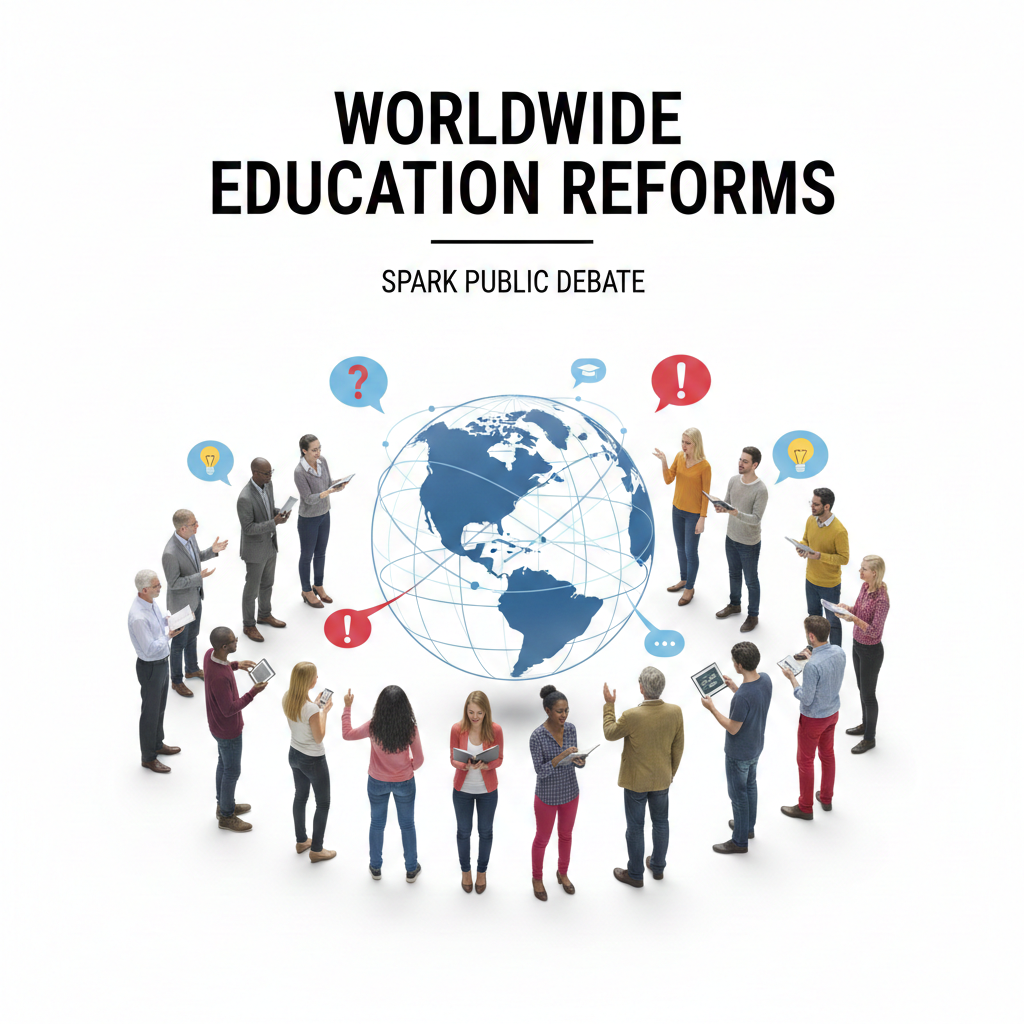
Education systems around the world are undergoing significant reforms, prompting intense public debate across continents. Governments, policymakers, educators, and parents are reevaluating how education should function in a rapidly changing world shaped by technology, globalization, and shifting workforce demands. These reforms aim to modernize outdated systems, improve accessibility, and better prepare students for the challenges of the future. However, the pace and direction of change have sparked diverse reactions, ranging from strong support to vocal criticism.
In many countries, education reform is no longer limited to minor curriculum updates. It now involves structural overhauls, digital integration strategies, assessment redesign, and funding reallocations. As a result, public interest has surged, and conversations around education policy have become central to national debates.
Curriculum Modernization And Digital Integration
One of the most visible aspects of global education reform is curriculum modernization. Traditional models focused heavily on rote learning and standardized testing. Today, governments are introducing curricula that emphasize critical thinking, problem solving, digital literacy, and interdisciplinary learning.
Digital transformation plays a central role in these changes. Schools are increasingly incorporating online platforms, virtual classrooms, and interactive learning tools. The expansion of broadband access and educational technology has accelerated this shift. Supporters argue that digital integration prepares students for technology driven economies and improves access to quality resources.
However, critics raise concerns about the digital divide. In many regions, unequal access to devices and reliable internet connections risks widening existing inequalities. Policymakers face the challenge of ensuring that modernization efforts do not unintentionally disadvantage marginalized communities.
Reforms In Assessment And Evaluation
Standardized testing has long been a cornerstone of education systems worldwide. Yet many reform initiatives are moving toward alternative assessment methods. Competency based evaluations, project driven learning, and continuous assessment models are replacing or supplementing traditional exams.
Proponents believe these methods provide a more comprehensive view of student capabilities. They argue that standardized tests often fail to capture creativity, collaboration skills, and real world application of knowledge. By shifting evaluation methods, education systems aim to foster holistic development.
Opponents, however, worry about consistency and accountability. Standardized assessments offer measurable benchmarks that enable comparison across regions. Without clear metrics, critics fear that maintaining uniform standards may become more difficult.
As debates intensify, platforms like NewsToDaya are closely following how different countries balance innovation with accountability in their education reforms.
Teacher Training And Workforce Development
Education reform extends beyond students to include teacher development and professional training. Governments recognize that meaningful change requires equipping educators with updated skills and resources. Professional development programs now focus on digital pedagogy, inclusive teaching strategies, and adaptive learning techniques.
Teachers, often at the forefront of reform implementation, have mixed reactions. Many welcome additional support and modern teaching tools. Others express concerns about increased workloads, insufficient funding, and rapid policy shifts without adequate consultation.
Workforce alignment is another key driver of reform. As industries evolve due to automation and artificial intelligence, education systems are under pressure to produce graduates with relevant skills. Vocational training, STEM education, and entrepreneurship programs are receiving renewed emphasis.
Balancing academic rigor with practical skill development remains a central challenge for policymakers worldwide.
Public Concerns And Political Debate
Education is deeply connected to cultural identity and social values, which explains why reforms often trigger passionate debate. Parents and community leaders frequently question changes to curriculum content, language policies, and historical narratives.
In some countries, education reform has become a prominent political issue. Election campaigns increasingly feature promises related to school funding, tuition costs, and higher education access. Public demonstrations and advocacy campaigns highlight the intensity of citizen engagement.
Financial considerations also play a significant role. Expanding digital infrastructure, updating facilities, and training teachers require substantial investment. Governments must balance reform ambitions with fiscal realities, ensuring sustainability without compromising quality.
These debates reflect broader societal questions about equality, opportunity, and the purpose of education in modern life.
Higher Education And Global Competitiveness
Universities and colleges are also at the center of reform discussions. Many higher education institutions are revising admission criteria, research funding models, and international collaboration strategies.
Global rankings and competition for international students influence policy decisions. Countries aim to attract top talent while expanding domestic access. Scholarship programs, cross border research initiatives, and digital degree offerings are becoming more common.
The shift toward hybrid and online learning models has reshaped higher education delivery. While this increases flexibility and accessibility, it also raises concerns about academic integrity and student engagement.
NewsToDaya continues to analyze how these higher education reforms impact global competitiveness and knowledge economies.
Equity And Inclusion In Education
Equity remains one of the most pressing themes in education reform. Policymakers emphasize inclusive education strategies that address disparities based on income, gender, disability, and geographic location.
Programs targeting early childhood education, rural school development, and special education services are expanding in many regions. Supporters argue that inclusive reforms strengthen social cohesion and long term economic resilience.
However, implementation challenges persist. Resource limitations, infrastructure gaps, and administrative inefficiencies can hinder progress. Ensuring that reforms translate into tangible improvements requires sustained commitment and effective governance.
Global Collaboration And Shared Learning
Education reform is increasingly influenced by international collaboration. Governments participate in global forums, share best practices, and benchmark performance through international assessments.
Cross border partnerships allow policymakers to learn from successful models and adapt strategies to local contexts. Digital platforms facilitate knowledge exchange among educators worldwide.
Despite these collaborative efforts, reforms must remain sensitive to cultural and societal differences. What works in one country may not be directly transferable to another. Adaptation and contextualization are essential for long term success.
Long Term Implications For Future Generations
The outcomes of current education reforms will shape future generations. By aligning education systems with evolving economic and technological landscapes, governments aim to equip students with resilience and adaptability.
Students entering the workforce in the coming decades will face challenges that differ significantly from those of previous generations. Climate change, automation, and global interconnectivity demand new competencies. Education reform seeks to prepare learners for these realities.
Public debate, while sometimes contentious, reflects the importance of getting reform right. Education influences not only economic prospects but also civic participation and social mobility.
Balancing Innovation With Stability
Reforming education systems requires careful balance. Rapid innovation can bring progress, but stability ensures continuity and trust. Policymakers must engage stakeholders transparently, incorporate feedback, and evaluate outcomes rigorously.
Pilot programs, phased implementation strategies, and evidence based policymaking can reduce risks associated with sweeping changes. Continuous monitoring and adjustment help maintain credibility and effectiveness.
The ongoing global debate underscores the complexity of education reform. Diverse perspectives highlight the need for inclusive dialogue and collaborative problem solving.
As nations continue to experiment with new models, the world watches closely. The success of these reforms will depend on leadership, resource allocation, and community engagement. Through detailed reporting and analysis, NewsToDaya remains committed to providing comprehensive coverage of worldwide education reforms and the public debates they spark.
Education stands at a crossroads. Whether these reforms achieve their intended goals will determine how societies adapt to the demands of the twenty first century. The conversation is far from over, and its outcome will influence generations to come.